Home›Articles›sloopDX: a Dexed-based DX7 engine and FM drums for the …
Articles

sloopDX: a Dexed-based DX7 engine and FM drums for the SLOOP groovebox on the M-VAVE FM-1

sloopDX firmware adds a Dexed-based six-operator DX7 engine, FM drums and a web editor to SLOOP on the M-VAVE FM-1. Features, status and limits explained.

Bernardo de Azevedo
Bernardo de Azevedo
· Updated
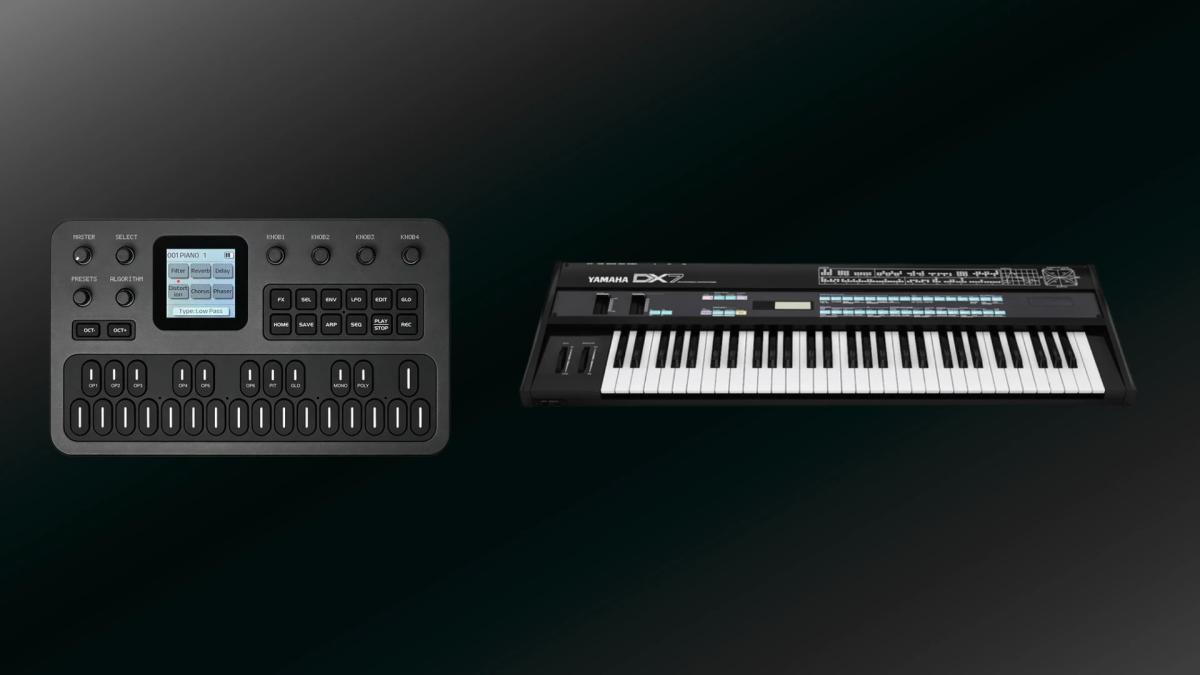
sloopDX firmware: M-VAVE FM-1 pocket synthesizer beside a Yamaha DX7

The sloopDX firmware is a fork of the SLOOP groovebox that adds a six-operator DX7-style voice engine, a set of FM drum sounds and a browser editor to the M-VAVE FM-1. The README credits the fork to Sven Trogus, and the repository is published on GitHub under the name zvenson. The README describes version 4.0 as a beta at the time of writing.

The central question is what a second, Dexed-derived engine and a drum section bring to a pocket synth that already offers FM, and what the author asks of users while parts of the code remain untested on a real unit. This article goes through the features, the lineage, the install path and the open issues.

What the sloopDX firmware adds to SLOOP

sloopDX is a fork of SLOOP, the live-looping groovebox by isod89, which itself builds on the Felucca platform by Leo Kuroshita of Hügelton Instruments. The README states that sloopDX is not affiliated with either project. In practice the sloopDX firmware lets a user keep the SLOOP way of working, with tracks, patterns and a song mode, and gains a different set of sound sources.

The additions fall into two groups. One is a six-operator engine ported from the msfa core of Dexed, the open-source DX7 emulator, as set out in the project’s README. The other is a bank of FM drum sounds that share the same sequencer. Four tracks draw on a shared pool of 256 steps, and a single pattern can run up to 128 of them, according to the project’s installer page.

The DX7 engine and how closely it follows Dexed

In the sloopDX firmware, the engine offers six operators, 32 algorithms, operator envelopes, a pitch envelope, an LFO and operator feedback. The project page adds keyboard scaling and a low-pass filter with cutoff and resonance on every voice. Voices can be edited on the device itself or in the web editor.

The README claims that 99% of rendered samples match Dexed, with the remainder within one or two least-significant bits. That is a comparison between two software renderings, and neither the README nor the project page presents it as a measurement taken on the FM-1. It supports the claim that the port is faithful to Dexed’s arithmetic, but it says little about how the finished firmware sounds on the hardware.

On content, the firmware ships 20 factory voices that the author designed for the project, with no Yamaha or M-VAVE data included. Eight further banks of 32 voices can be loaded into flash from the user’s own .syx files, and the page points to the yamahablackboxes.com archive as a source of original DX7 patch data.

Drums, sequencing and performance tools

The drum section has 16 FM sounds arranged in four kits, called DX KIT, 808 FM, ELECTRO and METAL, plus a user kit named MY KIT. Each sound has eight macro controls, and individual steps can lock tune and decay. The project page also describes a dice function that generates new kits from a seed, and an option to save the user kit to flash and export it as a .syx file.

Around the sequencer sit an OMNI chord mode, 15 arpeggiator modes, ratchets, layers and free takes. The effects include sends, distortion, chorus, delay and reverb, along with punch-in effects. The count is not consistent in the documentation. The README gives 27 punch-in effects in its description of version 4.0 and 16 in its specifications table, and the project page also states both figures in different places. The 27 figure is the one tied to 4.0, and the exact number is best checked against the version installed.

Version 4.0 is the larger step. According to the README it adds use of the chip’s second processor core, per-track MIDI channels, MIDI learn, an insert effect on every track and a texture bed. The README credits Andre Rezemini with the second-core work in SLOOP and Charles Vestal’s X0X with the start of dual-core operation, and Vestal’s own work is covered in the site’s article on his X0X and FoMni firmwares.

Connectivity covers USB MIDI, a TRS MIDI input, MIDI clock in and out, and USB audio input at 44.1 or 48 kHz. Bluetooth MIDI is not supported, and a USB keyboard cannot be plugged directly into the FM-1, both noted in the README.

Who built it and what it builds on

Sven Trogus is credited for the DX7 port, the FM drums and the fork. The zvenson GitHub profile also lists other FM-1 projects, among them zp12, described there as an attempt to recreate the SP-12 sampler, and a Doom port. An OberVave polysynth and the Dinghy base firmware, covered in a separate article, are published under the same account.

The credits list is long for a single-author fork. It names isod89 for SLOOP, Kuroshita for Felucca, and the Baud Girl FM-1+VA project as the inspiration for the voice-edit list. It also acknowledges Kerem Kilic for Melodee, juanjiant-bit for the knob acceleration and glide features of JIANT FM, and several contributors who supplied fixes.

The code is GPL-3.0-only, with the Dexed core under Apache-2.0, the Terminus font under the SIL Open Font License and the icons under MIT. The README also notes that DX7 is a Yamaha trademark.

Installing the sloopDX firmware and going back

The README lists three routes: a browser installer used from Chrome or Edge, a Python script that takes a firmware package, and building from source. The browser route needs a data cable connected directly to the FM-1 without a hub. This article does not repeat the steps, because the project documents them and because the details change between versions.

Readers should read the author’s warnings before flashing. The project page says that an interrupted update can leave the device unable to start, and the README states that custom firmware is installed at the user’s own risk. The README is somewhat more specific about recovery: a cut-off install leaves the FM-1 in update mode, where pressing Install again finishes it, and holding OCT- at power-on starts a USB rescue mode.

For a unit that no longer starts at all, it points to the separate FM-1-transporter tool. The README also explains how to return to SLOOP or to M-VAVE’s official V15 firmware, and advises backing up first because sloopDX projects may refer to sounds that SLOOP lacks. The site’s safe install and recovery guide covers the general precautions.

Strengths and limits

For the sloopDX firmware, the clearest strength is the candour of the documentation. The README separates what was tested on a unit from what was not, which is more than many hobby firmwares offer. Open code, a stated licence, a backup and restore function in the editor, and a documented route back to stock all lower the risk of trying it.

The limits are mostly about maturity. The README says version 3.5 was installed and played on a real FM-1, covering the boot screen, the DX7 voice list, the flash voice bank, drum kits and levels. It also says version 4.0 has not yet been run on a device, so the second core, the MIDI features inherited from SLOOP 2.6 and 2.7, the web editor end to end, processor load with three synth tracks and drums, USB audio and the MIDI input jack are all unconfirmed.

Two further cautions apply. Projects saved in 4.0 do not open in 3.x, and two arpeggiator settings must be reset before downgrading. The documentation also says that its screens are host renders of the firmware’s drawing code, with the sound rendered by the engine, so they illustrate the software rather than a captured device.

One discrepancy remains open. The repository’s releases page lists only v2.6, v2.4, v2.3 and v2.1 at the time of writing, while the README and project page describe version 4.0 as the newest and 3.5 as the last version played on a device. The README says the installer page carries the current package and refers to a 3.5 package file in the repository, so the browser installer is the documented route to the current build, and the numbering of the tagged releases does not match it.

How sloopDX compares with related projects

Against SLOOP, the sloopDX firmware narrows the focus to DX7-style FM. SLOOP’s own description in Synthtopia’s roundup of alternative FM-1 firmware centres on three synth layers and a drum machine built from Felucca’s engines. sloopDX keeps the structure and gives users a DX7-compatible patch library, which makes sense for anyone who already owns bank files.

Baud Girl’s FM-1+VA is a close relative in spirit, since the sloopDX README credits it for the idea behind the on-device voice list. The Lunar Modulator project, which will be covered separately, lists an FM6 engine built on the same msfa code, so at least two community projects draw on that code.

On reception, the Firmware Hub’s disclaimer lists sloopDX among the five projects it calls its own. No dedicated review or forum comment on sloopDX was available at the time of writing, so this article does not report user reactions.

Final perspective

The sloopDX firmware is a considered extension of SLOOP aimed at users who want DX7-style programming and FM drums inside a groovebox workflow. Its documentation is frank about gaps, and its reliance on Dexed gives it a verifiable reference point. The main weakness is that the 4.0 features, which carry much of the appeal, were untested on hardware at the time of writing.

A cautious approach suits the sloopDX firmware: back up, read the README, and check the project pages for newer test notes before relying on version 4.0 in a performance. Those details are likely to change quickly.

Sources

  1. sloopDX README, zvenson/dxsloop, GitHub
  2. sloopDX installer and editor page, zvenson / designburgapps.com
  3. dxsloop releases, GitHub
  4. zvenson profile, GitHub
  5. The FM-1 Firmware Hub, thefirmwarehub.com
  6. Alt Firmware Options For The M-Wave FM-1 Pocket Synthesizer, Synthtopia

Bernardo de Azevedo
Written by
Bernardo de AzevedoFounder & Editor

His connection with music began at age 6, in the 1980s, when his father introduced him to Jean-Michel Jarre's Rendez-Vous on vinyl. He works professionally in the legal field, while synthesizers became his space for abstraction and creative exploration. Founder of The Synth Source.