

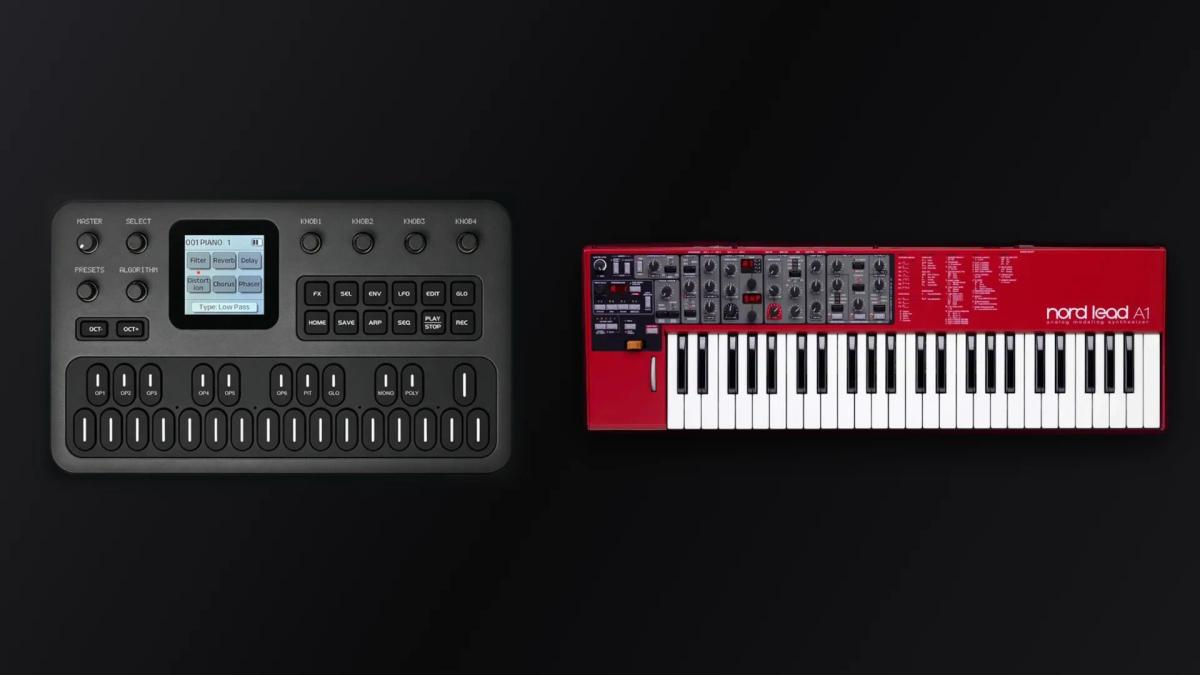
The Mycelium firmware is a free groovebox for the M-VAVE FM-1 built around forest, psytrance and Goa music. It is published on GitHub by megagott and branded as a MandaLars project, and it is built on Felucca and SLOOP. Version 1.0 is explicitly a test pre-release, which makes the central question one of evidence: what has been demonstrated, what the project’s own pages say about each other, and what remains unverified on a physical unit.
Table of Contents
What the Mycelium firmware is
According to its repository, Mycelium is an independent, open-source firmware for the FM-1 with no connection to M-VAVE. It targets four families of electronic dance music, namely forest, psytrance, Goa and hitech, and it ships original drum assets and icons together with factory songs. The firmware code is licensed GPL-3.0-only, and the source archive keeps the upstream copyright notices of the projects it builds on.
The foundation is the same pair that underpins other FM-1 projects, including Jangada. Felucca, by Leo Kuroshita of Hügelton Instruments, supplies the platform, and our Felucca article describes it. SLOOP contributes the live-groovebox approach. Mycelium narrows both towards one family of genres, replacing broad flexibility with a sound and tempo range chosen in advance.
The repository is small. At the time of writing it showed a single commit and five stars, which is normal for a first public drop and says nothing about quality.
Grooves, songs and the sound on offer
The most detailed description of what the Mycelium firmware plays is the German-language manual on the MandaLars site, dated 8 October. It lists six grooves of 32 steps each, at tempos from 144 to 196 BPM. It also describes four factory song banks named Forest Odyssey, Psy Ascension, Tekk Reactor and Hitech Portal, each running 240 bars in 16 sections. The manual says the factory songs are read-only and are reselected after a restart.
The FM1 page on the same site adds that the firmware has 21 factory presets, three drum kits and editable 32-step patterns with FM textures. It also describes a set of effects called PSY FX, which include a lowpass shared between kick and bass, plus echo and reverb controls.
These sources do not fully agree. The GitHub release notes say the package already includes forest, psytrance, Goa and hitech grooves and four factory songs, without naming the songs. The MandaLars FM1 page, however, describes hitech as still in development at 196 BPM.
The manual’s song list includes a hitech bank, and the FM1 page counts five grooves where the manual counts six, the extra one being TeKK at 170 BPM. The FM1 page also labels its sections both 1.0 and “0.8-dev”. The likeliest explanation is documentation written at different times, but that is inference rather than confirmation.
Controls: bass patterns, punch effects and MIDI
The manual gives a compact picture of the playing surface and of how the Mycelium firmware handles a groove. A short tap on ARP cycles the bass pattern between GALLOP, OFFBEAT and FULL-ON, and holding it for at least 700 milliseconds enters a roll mode. A short tap on FX opens the effects page, and holding FX gives punch effects.
Four knobs shape the effects. The first controls the shared lowpass, the second a synced echo and reverb, the third echo feedback and drive, and the fourth a ring modulator labelled ALIEN. In the track view, the fourth knob controls distortion for bass and drums instead.
Several behaviours concern loading and saving. The MandaLars page says the firmware offers a custom boot logo and USB device name, and that saved work is restored at power-on. Loading a groove replaces the current patterns and track sound, though saved project slots are left alone, and the manual stresses that a groove update does not overwrite a saved scene, so the new groove has to be loaded deliberately. For anyone moving between grooves in a live set, that is worth knowing in advance.
MIDI is available over USB and over the TRS jack. Channels 1 to 3 address the synth tracks, channel 10 the drums and channel 4 the selected track. Clock, start and stop are supported, and the clock source is set in the system menu as USB, TRS or internal. The MandaLars page states that MIDI control change messages for sound parameters are not yet implemented, which limits integration with controllers.
A test release, honestly labelled
The status of the Mycelium firmware is unusually well documented by its own maintainer. The GitHub release is titled as a test release, carries the tag v1.0-test, is dated 14 October and is flagged as a pre-release. The package is a firmware file with a Felucca update loader, and the notes publish a SHA-256 checksum so a download can be compared.