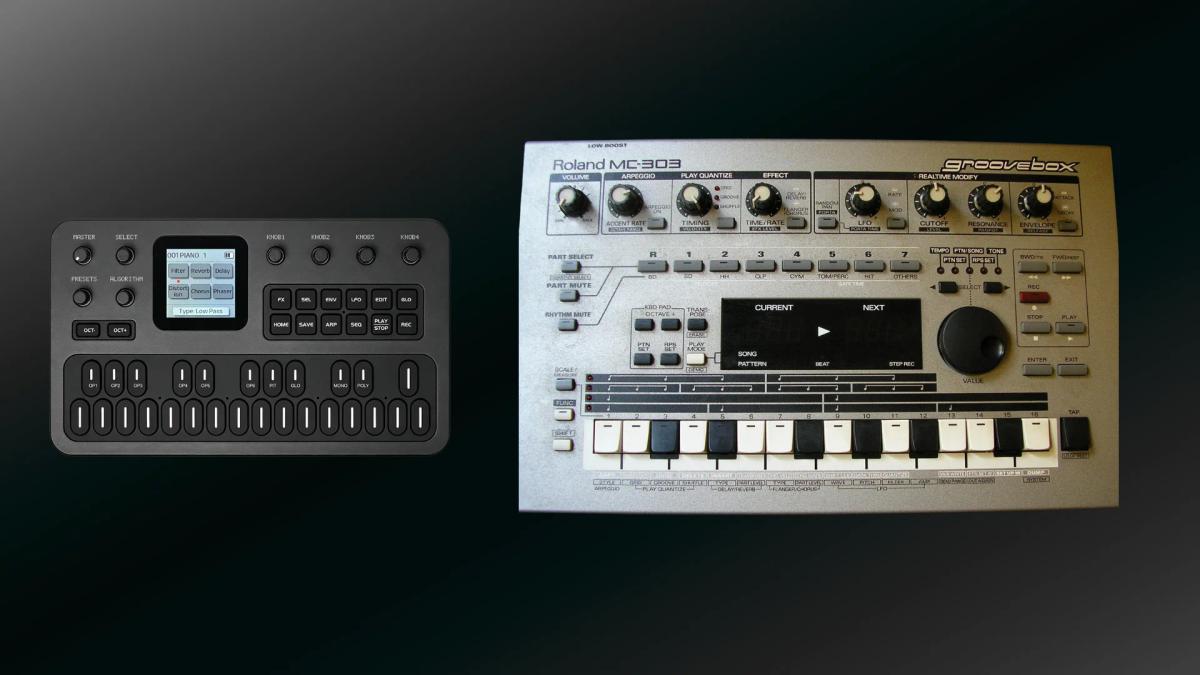
The recall mechanism is concrete. Holding OCT- and OCT+ at power-on starts the stock FM-1 firmware until the next power-on, a safe mode that is useful both for troubleshooting and for owners who want the original instrument back for a session. The browser installer takes about three minutes, checks the unit and the file before writing, and, according to the developer, resumes if the cable disconnects.
It runs in Chrome or Edge on macOS, Windows, Linux and ChromeOS; Safari, iPhone and iPad are not supported because they lack Web MIDI. Returning fully to V15 is possible from the same page, but it erases saved Groove projects, so they need to be exported first.
What $29 buys
The price is a one-time payment of $29, processed through Stripe and tied to the buyer’s email address. It includes every 1.x update, the installer, the sound packs and the stock firmware restore. The site offers a browser version of Groove OS that, according to the developer, runs the same code as the hardware and can be played from a computer keyboard before buying. Refunds are available on request within 14 days of purchase, after which the developer asks buyers to get in touch if the software does not do what the site describes. Support is by email, with the promise that “a person answers.”
Groove OS is closed. Its credits page describes it as “proprietary software by Peter Gombos” and lists the open components it uses: the msfa DX7 engine from Google, Pascal Gauthier and Jean Pierre Cimalando under the Apache 2.0 license, public domain and CC0 samples from Sonic Pi, the Versilian Community Sample Library and Freesound contributors, and published algorithms such as Freeverb, Dattorro’s reverb, the RBJ EQ cookbook, Szabo’s super saw paper and Simper’s state-variable filter, implemented in-house. The site states that Groove OS is not made, endorsed or supported by M-VAVE.
The case against paying
The criticism started almost immediately, and it came from the press as well as from readers. Synth Anatomy’s announcement praised the project but added, “It’s a shame it isn’t open-source and free.” The author also wrote, “I have a bit of an issue with paying for something that can actually brick the hardware,” and said they would be more comfortable if such a firmware came from M-VAVE, where warranty would apply. The same article speculated that AI had been involved, writing, “Given how quickly it was produced, I assume an AI agent was involved here, too.” Gombos’s site does not mention AI, and that claim remains the author’s assumption.
The comment section went further. Of the article’s comments that addressed the price, all were critical. Readers argued that $29 is about half the cost of the hardware, that free or donation-based alternatives such as SLOOP, Felucca and BAUDGIRL’s firmware existed, that the bricking risk did not justify a fee, and that paid firmware could discourage developers from sharing their work openly. One commenter said they might pay $10 to $20 after seeing how it performed, but not $29. On Synthtopia’s roundup of alternative firmwares, at least one reader dismissed Groove OS outright as AI-generated.
The timing sharpened the argument. SLOOP, a free and open-source groovebox built on Felucca, followed a day later. X0X offered a free ReBirth-style acid machine. On 17 October, M-VAVE itself launched FM1 Open, whose official alternative firmware, described in its GitHub README as an eight-track project with eight sample slots, includes an FM synth, a 303-style bass, an 808-style drum machine, a chiptune synth, a pluck synth and a sampler, with its application code under GPL-3.0. Any paid groovebox for the FM-1 now competes with a free one from the manufacturer.
The case for charging
Not everyone saw the price as a problem. Time To House, in its 6 October analysis, called Groove OS the most feature-complete of the four grooveboxes released that week and wrote that “Gombos charging $29 isn’t greedy, a full groovebox rebuild is real engineering work.” The same piece called the situation “a healthier problem than it looks,” arguing that the scene “has more builders than targets right now, not fewer.”
Its central point was about competition rather than morality. Because free alternatives exist, it argued, “Groove OS has to win on features alone, not on being the only option,” and it described the launch as “a live test of whether paid firmware can survive in a scene whose whole ethos is DIY and free.” Read that way, the price buys things a free GitHub release usually does not promise: a refund window, a named person answering email, a browser demo, structured onboarding, sound packs and a commitment to every 1.x update.
There is also a practical argument for paying developers at all. Much of the FM-1 scene depends on individuals working for free, often releasing betas that are updated every few hours and marked as untested on real hardware. A paid product at least gives its author a reason to keep supporting it. Whether that is enough to justify the fee is a judgment each buyer has to make, and the browser demo and refund policy make that judgment easier to test.
Final perspective
Groove OS is one of the most complete things anyone has built for the FM-1. It turns a single-voice DX7-style box into an eight-track sketchpad with parameter locks, conditional steps, drawn automation, a perform page and project files, and it does so while keeping the stock engine and a power-on safe mode that returns the unit to its original state. On features and polish, the $29 price is easy to defend, and Time To House defended it.
Its difficulty is context. The M-VAVE FM-1 became popular because it was cheap, and its firmware scene grew on free, mostly GPL-licensed code. In that environment, a proprietary paid firmware carries the burden of proof, and critics at Synth Anatomy and in reader comments argued that it had not met it, especially given the risk any unofficial firmware carries. M-VAVE’s own free FM1 Open raises the bar further. Groove OS’s future depends less on whether charging for firmware is acceptable in principle and more on whether its depth and support continue to outpace what the community and the manufacturer give away.
Sources
- Groove OS, Peter Gombos
- Buy Groove OS, Groove OS
- Credits and licenses, Groove OS
- Refunds, Groove OS
- Groove OS turns the M-VAVE FM-1 into an 8-track groovebox, Synth Anatomy
- Four custom firmwares turn the M-VAVE FM-1 into a groovebox, Time To House
- M-Vave FM-1: now is pocket DAW, Groove OS review, Matrixsynth
- Alt firmware options for the M-Vave FM-1 pocket synthesizer, Synthtopia
- M-VAVE FM-1: custom firmware collection, Piano and Synth Magazine
- 3dSam SLOOP: custom firmware turns M-VAVE FM-1 into a 4-track groovebox, Synth Anatomy
- M-Vave FM-1 custom and alternative firmware, FW Radar
- awesome-fm-1, GitHub
- M-VAVE FM-1 Open: the green light for custom firmware and community hacks, Synth Anatomy
- m-vave/fm1_open, GitHub
- M-Vave FM-1: now is pocket DAW, Groove OS review, NatLife Sounds, YouTube