Home›Articles›TONTO: The room-sized synthesizer Stevie Wonder first t…
Articles

TONTO: The room-sized synthesizer Stevie Wonder first thought was broken

TONTO: According to Malcolm Cecil, the first thing Stevie Wonder did when he met the TONTO synthesizer was press several keys at once. When nothing like a…

Bernardo de Azevedo
Bernardo de Azevedo
· Updated
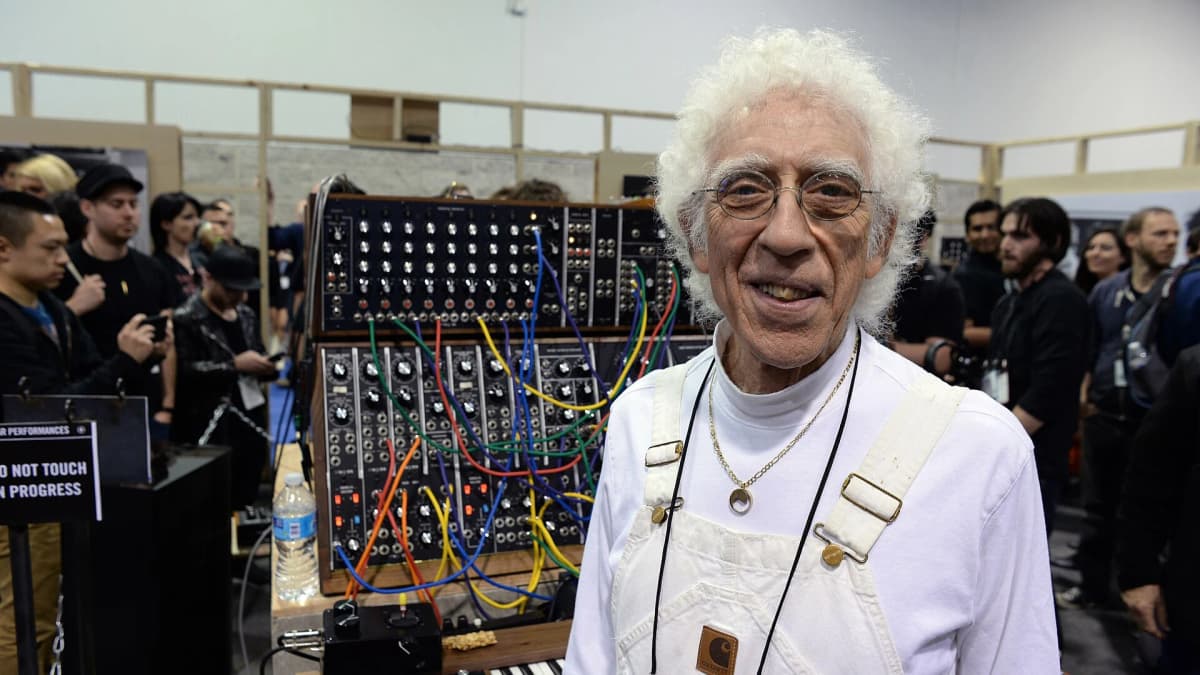
TONTO - historic photo

According to Malcolm Cecil, the first thing Stevie Wonder did when he met the TONTO synthesizer was press several keys at once. When nothing like a chord came out, Wonder assumed the machine was broken. It was not broken. It was monophonic, and it was also, by then, the size of a small room.

That small misunderstanding opened one of the most productive collaborations in popular music, a run of 1970s albums on which a British jazz bassist and an American Moog owner helped a young artist turn a wall of modules into bass, horns and strings. Yet the way the instrument itself came together is stranger than the records it made possible, and some of the details are still told differently depending on who is telling them.

Table of Contents

  • TONTO synthesizer: what the name stands for
  • Two men who traded skills
  • A Moog that grew into a wall
  • The weekend Stevie Wonder came to the studio
  • What the machine did on the records
  • The partnership ends, the machine moves on
  • A museum instrument that still works
  • Final perspective

TONTO synthesizer: what the name stands for

TONTO stands for The Original New Timbral Orchestra, and Wikipedia describes it as a multitimbral polyphonic analog synthesizer, the first and still the largest of its kind. That description matters because TONTO was never a single product. It was a growing assembly of synthesizers and modules that its builders played as one instrument.

The duo that built it called itself Tonto’s Expanding Head Band. According to the Mojo obituary of Malcolm Cecil, the name came from a concept Robert Margouleff glimpsed while under the influence of peyote. The same source says the finished wall of polyphonic equipment weighed about one ton.

Two men who traded skills

Cecil was born in London in 1937 and began as a jazz bassist. Wikipedia lists him as a founding member of the Jazz Couriers, a leading British quintet of the late 1950s, and says he performed with Tubby Hayes and Ronnie Scott. He also studied physics at London Polytechnic and worked as an engineer in the Royal Air Force from 1958 to 1961.

Mojo adds that he moved to New York in 1968, where he met Margouleff, while Rolling Stone’s account says Cecil moved to the United States in 1967, so the year differs by source.

Cecil’s own story of the meeting, told to Red Bull Music Academy, starts at Media Sound in New York. He worked there as an engineer, and the Moog 3C in Studio A belonged to Margouleff, who came in only occasionally and late at night. About five nights after Cecil started, Margouleff arrived. They agreed to trade skills. Cecil would teach Margouleff the mixing console, and Margouleff would teach Cecil the Moog. They shook on it. The first piece they made together that night was called “Aurora.”

A Moog that grew into a wall

About six months later, Cecil says, Herbie Mann visited the studio. Cecil had played with Mann at Ronnie Scott’s in London. After hearing “Aurora,” Mann offered Cecil a record contract, which led to the album credited to Tonto’s Expanding Head Band. Wikipedia lists that album, Zero Time, as a 1971 release.

TONTO itself began as Margouleff’s Moog modular Series III. A second Moog III came later, then four Oberheim SEM modules, two ARP 2600s and Serge modules, some of which Serge Tcherepnin and Cecil designed as custom pieces. Equipment from EMS, Roland and Yamaha joined them, and digital sound generation, sequencers and MIDI control arrived even later.

Physically, Wikipedia says the instrument sat in a semicircle of curved wooden cabinets about 20 feet in diameter and 6 feet tall.

The weekend Stevie Wonder came to the studio

By Cecil’s account, a friend named Ronnie who was subbing on bass in Wonder’s band brought the Tonto album to Wonder and presented it as a keyboard instrument. Around Memorial Day weekend 1971, days after Wonder turned 21, Ronnie brought him to Cecil’s apartment above the studio. Cecil opened the closed studio.

Wonder wanted to touch the synthesizer. He asked whether it was a keyboard, and when he pressed multiple keys at once and heard nothing resembling a chord, he thought something was wrong. Cecil explained that the instrument played one note at a time, like a wind instrument. Wonder asked for a piano and for recording, and Cecil rolled a two-inch test tape.

They recorded 17 songs that weekend, Cecil says. Wonder first wanted an upright bass, but Cecil felt that pushed the music toward jazz, so he built a synthesized bass sound. Wonder liked it. The Rolling Stone version, told from Wonder’s side, adds context: in 1971 he turned 21 and his Motown contract expired, and he had heard Zero Time and sought out its makers in New York.

What the machine did on the records

Wonder told Cecil and Margouleff the sounds he wanted, and they programmed the Moog to produce them, according to Rolling Stone. Within a month of meeting, they had written roughly 40 to 50 songs, Wonder recalled. Sessions sometimes ran around the clock.

Wikipedia lists four Wonder albums that feature TONTO: Music of My Mind and Talking Book in 1972, Innervisions in 1973 and Fulfillingness’ First Finale in 1974. Gearnews says Cecil and Margouleff produced five Wonder albums in the 1970s without naming them, so the count depends on how one counts.

Wonder described specific moments. “They Won’t Go When I Go” was among the first songs they wrote together and used synthesized bass and horn sounds. For “Girl Blue,” Cecil created sounds run through a device called the Bag, a precursor of the talk box. Wonder said Cecil suggested the title Talking Book, and that the strings on “Super Woman (Where Were You When I Needed You)” came from the system. Wonder also renegotiated with Motown on better terms, including ownership of his publishing and a higher royalty rate.

Innervisions was nominated at the 1974 Grammys, and Wonder had planned to skip the ceremony until Cecil called to say the album had won for best engineered recording. Wikipedia’s Cecil article puts the award at 1973 and says it beat The Dark Side of the Moon and Goodbye Yellow Brick Road. Wonder gave his first Grammy to his mother.

The partnership ends, the machine moves on

Cecil left Wonder about four years after they began working together, by his own account. At that point, he says, roughly 50 songs had been published, and he returned about 250 unreleased recordings to Wonder, some of which have since appeared. Wikipedia reports that Cecil acquired Margouleff’s share of TONTO in 1975, and MusicTech says he looked after it for close to four decades.

The instrument wandered. In the mid-1990s it moved to Mutato Muzika, Mark Mothersbaugh’s studio, though Wikipedia says rumors that Mothersbaugh bought it were false. It later returned to Cecil’s home in Saugerties, New York. Meanwhile, TONTO appeared on records by the Isley Brothers, Quincy Jones, Bobby Womack, Billy Preston and Weather Report, and it was pictured on the cover of Gil Scott-Heron and Brian Jackson’s album 1980. It also stood in for the “electronic room” in the 1974 film Phantom of the Paradise.

A museum instrument that still works

In late 2013, the National Music Centre in Calgary, Alberta purchased TONTO. John Leimseider completed a multi-year restoration in late 2017, replacing worn jacks and repairing connections. Today the instrument is playable and part of the center’s living collection, where artists can record with it in the studios.

Cecil died on March 28, 2021, at age 84, in Saugerties, New York. Wikipedia notes that in 2006 he and his son performed at the Big Chill Festival using a “Virtual TONTO,” because the full instrument was too large to ship.

Final perspective

The TONTO synthesizer is usually described by its size, and the size is impressive. But the better lesson in this story is about translation. A machine that played one note at a time met a musician who wanted bass, horns and strings, and two engineers acted as the interface between them, programming what he described and suggesting what to try next.

It is also a story about how fragile the record is. Years, album counts, names and even the origin of a name vary from source to source. What is consistent across them is the picture: a wall of modules, a young star deciding what he wanted to hear, and engineers programming it into existence until the sound belonged to him.

Related stories

Sources

Bernardo de Azevedo
Written by
Bernardo de AzevedoFounder & Editor

His connection with music began at age 6, in the 1980s, when his father introduced him to Jean-Michel Jarre's Rendez-Vous on vinyl. He works professionally in the legal field, while synthesizers became his space for abstraction and creative exploration. Founder of The Synth Source.