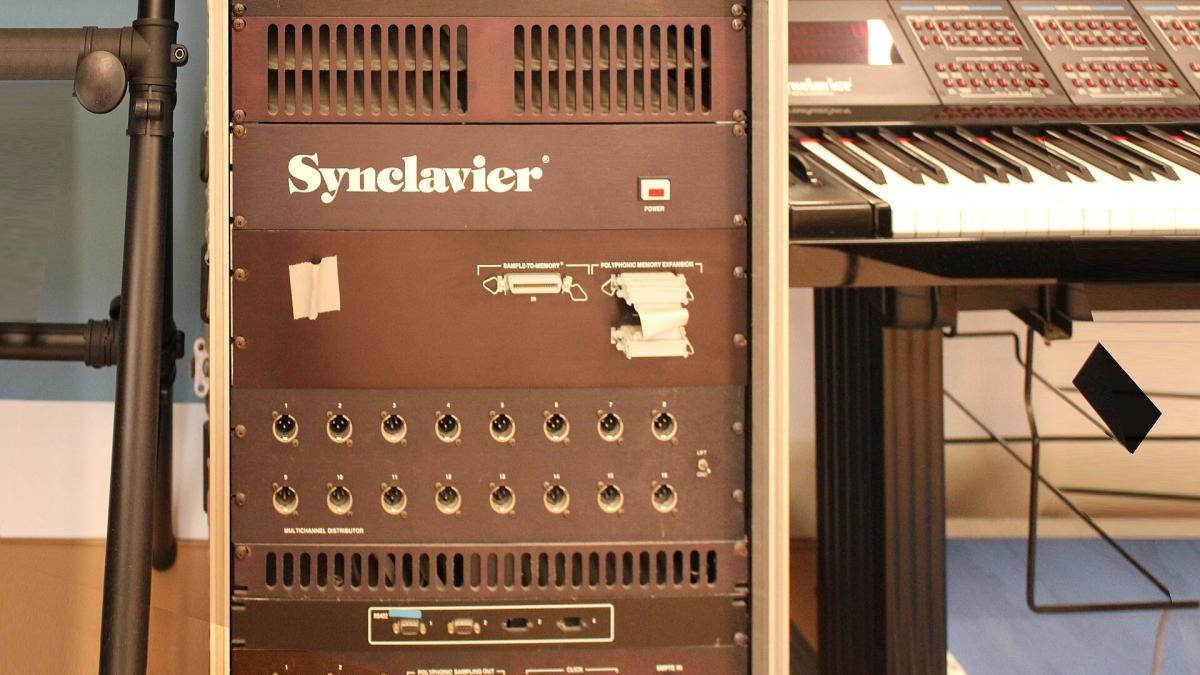
Zappa also explained why he liked the arrangement. Live performance, he said, depends on the room, the players, the conductor, rehearsal budgets and copying errors, so results are unpredictable. With the Synclavier he did not have to ask whether a human could play a difficult rhythm or interval, because the machine would. He told the magazine that he did not miss touring.
He did not work alone. Wikipedia credits Bob Rice as computer assistant and Bob Stone with engineering on Jazz From Hell, and the MIDI Association article describes Stone as the recording engineer who worked with Rice on sampling sessions. Sound on Sound quotes Zappa saying that his assistant handled most of the technical work, which suggests that the “computer composer” image hides a small team doing very hands-on labor.
The Music & Sound Output piece adds that Zappa thought of his works as small compositions he called items, the longest running 22 minutes and most lasting five to seven.
Jazz From Hell: the album the machine played
Jazz From Hell came out in November 1986 on Zappa’s Barking Pumpkin label, with EMI handling the UK, and Rykodisc issued the CD in 1987, Wikipedia reports. It was recorded in 1985 and 1986 at Zappa’s UMRK studio, with one exception, and it was his last studio album released during his lifetime. All compositions were played on the Synclavier except “St.
Etienne,” a live guitar solo recorded on May 28, 1982, in Saint-Étienne, France. Music & Sound Output said more than 80 percent of the album was performed on the Synclavier, and that it took about eight months to make although some of its material was more than six years old.
The sounds were built partly through re-synthesis. Sound on Sound reports that Zappa described “evolvers,” which crossfade between timbres, and “resolvers,” which trigger melodic figures from a single key, and that a vocal sample of Johnny Guitar Watson served as source material. He demonstrated tracks at the Los Angeles AES Convention in November 1986.
The record won the Grammy for Best Rock Instrumental Performance, which Wikipedia dates to the 30th Annual Grammy Awards in 1988 rather than 1987. Early reviewers often called it slick and emotionless, a response that a MIDI Association article, citing AllMusic, suggests was a reaction to the method rather than to the music.
G-Spot Tornado and the limits of the Synclavier
The most famous track is “G-Spot Tornado.” Wikipedia says Zappa believed it was too difficult for a human to play, so he first recorded it on the Synclavier. He turned out to be wrong. Ali N. Askin arranged the piece in 1992, and it appeared on The Yellow Shark in 1993, Zappa’s last album, played by Ensemble Modern in Frankfurt.
Zappa’s own comments suggest the Synclavier was a tool for a question, not an answer. He told Sound on Sound that he was more interested in musical ideas than in synthesized sounds, and that he respected performers who make an instrument carry emotion. He doubted audiences would pay to watch a concert of Synclavier playback. The device could execute impossible rhythms, but he did not claim it could replace the human element.
Final perspective
The history of the Synclavier is a reminder that the most extreme instruments are often adopted for modest reasons. A research project at Dartmouth became a commercial system whose price put it beyond most musicians. Zappa, who could afford it, treated it first as a better pencil and then as an orchestra that never complained about the part.
The company did not survive its own success. Perfect Circuit says New England Digital shut down in 1993 after filing for bankruptcy, which corrects the 1992 date sometimes given. Cameron Jones bought the intellectual property and kept supporting users, and the sound lives on in software such as Arturia’s Synclavier V and the Synclavier Regen. The Synclavier itself has outlasted its maker, and so has the argument Zappa’s album started about what a computer can play that a person cannot.
Related stories
Sources