Home›Articles›Silver Apples: The oscillator duo a Pan Am lawsuit pull…
Articles

Silver Apples: The oscillator duo a Pan Am lawsuit pulled off the shelves

Silver Apples: In 1968 a New York duo released an album built from a pile of war-surplus oscillators and a drum kit. There were no guitars and no keyboards,…

Bernardo de Azevedo
Bernardo de Azevedo
· Updated
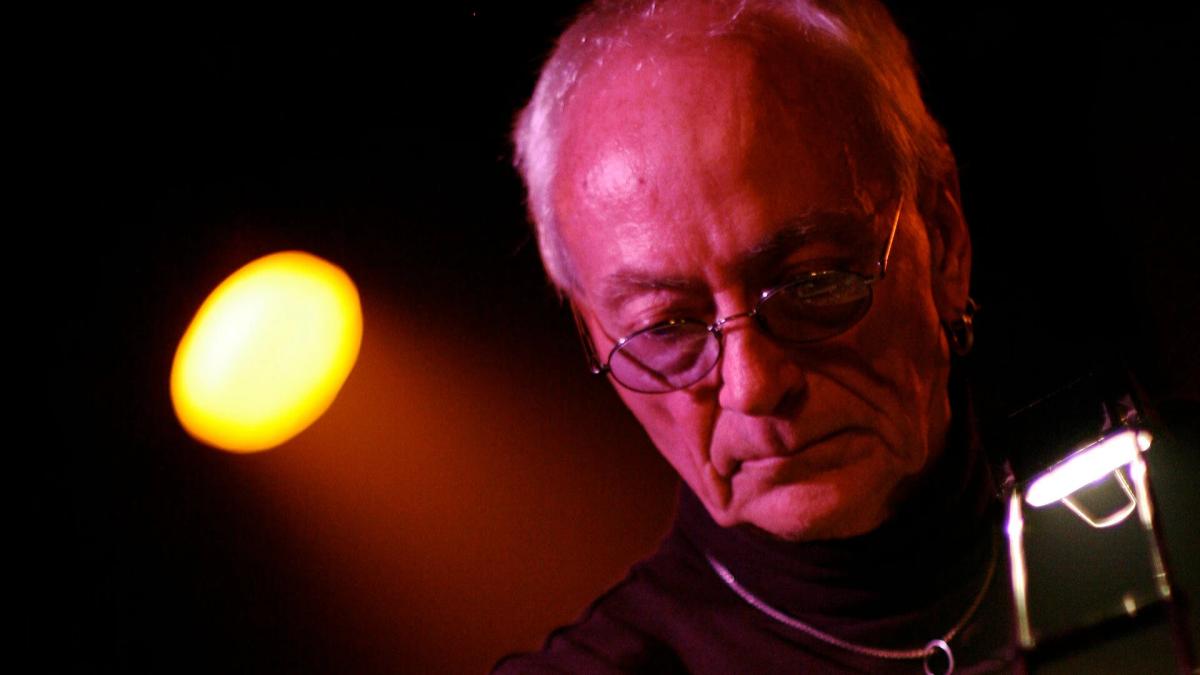
Silver Apples - historic photo

In 1968 a New York duo released an album built from a pile of war-surplus oscillators and a drum kit. There were no guitars and no keyboards, and the singer controlled his rig with his hands, feet and elbows. Silver Apples made rock music out of equipment that was never meant to make music, and then lost almost everything because of a photograph taken in an airplane cockpit.

The story contains the usual ingredients of a cult band: poor sales, a record company that did not know how to market them, and a rediscovery decades later. What makes it unusual is the mechanism of the collapse. A lawsuit over a cover design pulled the second album off the shelves. And the instrument at the centre of it all, which one account says a record company named after its inventor, behaved less like a machine than like a temperamental houseguest.

Table of Contents

  • Silver Apples: a rock band that lost its guitarist to a box of oscillators
  • The Simeon: a rig played with hands, feet and elbows
  • A name from Yeats and a record deal with Kapp
  • The New York sound
  • Contact: the cockpit, the crash and the lawsuit
  • Rediscovery, a broken neck and a drummer’s death
  • Final perspective

Silver Apples: a rock band that lost its guitarist to a box of oscillators

Silver Apples began in New York in 1967, growing out of a conventional rock group called The Overland Stage Electric Band, which played regularly in the East Village. According to Wikipedia, the singer Simeon, born Simeon Oliver Coxe III, began adding a 1940s audio oscillator to the group’s sound. The other members were alienated by the experiment and left, and the band shrank to Simeon and the drummer Danny Taylor.

Red Bull Music Academy gives the origin a specific place, saying Coxe conceived the instrument at Cafe Wha? in 1967 by plugging in an oscillator and jamming with the cover band. Electronic Sound’s profile adds a price: his first oscillator, a Second World War model, cost him ten dollars. Coxe himself, quoted by The Quietus, described the early build as chewing gum, masking tape and a soldering iron, adding that he was not an engineer and simply wanted a sound he could vary.

The Simeon: a rig played with hands, feet and elbows

The instrument is the heart of the story, and its descriptions do not match exactly. Wikipedia, citing the first album’s liner notes, says the arsenal grew to nine audio oscillators stacked on top of each other, with 86 manual controls operated by hands, feet and elbows. Red Bull Music Academy counts sixteen oscillators plus foot pedals, a bank of telegraph switches, wah-wah pedals and Echoplex units.

Electronic Sound says Coxe plays the instrument with 86 telegraph keys. The sources therefore agree on the principle, which was that the whole body played the rig, but not on the inventory.

The naming is also contested. Coxe calls the rig “The Thing,” according to Electronic Sound, and others call it “The Simeon.” Red Bull Music Academy says Kapp’s marketers christened it “The Simeon” after its inventor as a promotional ploy. Whatever the origin, the name stuck.

Playing it was physically demanding. Red Bull reports that six bass oscillators were wired through on and off switches on a plywood board at Coxe’s feet, that a second bank was played with telegraph keys, and that his right hand turned an oscillator carrying the lead line. Coxe had no keyboard training, and he reportedly put coloured stickers on the keys to mark chords for each song.

A name from Yeats and a record deal with Kapp

The duo took their name from W. B. Yeats’s poem “The Song of Wandering Aengus,” according to Wikipedia and Electronic Sound. It is the same poem that gave Morton Subotnick his album title, Silver Apples of the Moon, in 1967. None of the sources I read links the two uses, so it is best treated as a coincidence of two avant-garde artists reading the same poet.

The band signed to Kapp Records, which Little Village identifies as a subsidiary of Decca. Its interviewer reports that the label did not know how to market them and booked them on mismatched bills. Their debut, Silver Apples, appeared in 1968 and included the single “Oscillations.” Wikipedia adds that seven of the nine songs on the album had lyrics by the poet Stanley Warren, whom they met at the 1967 Fifth Annual Avant Garde Arts Festival organised by Charlotte Moorman.

The New York sound

The sound they made was unstable on purpose. Red Bull Music Academy reports that the pitch of the oscillators drifted with the stability of the power, the time of day, the weather and even nearby radio signals, so that Coxe had to keep adjusting his singing and often landed on what he called a “chord-with-no-name.” Portishead’s Geoff Barrow, quoted in the same article, described the out-of-tune oscillators as glue holding the songs together.

Little Village reports that the band was the house act at Max’s Kansas City, and that New York’s mayor, John Lindsay, called them “The New York Sound.” The city’s parks department booked them for free outdoor shows, and in 1969 they performed in Central Park alongside broadcast screens of the moon landing. Wikipedia notes that John Lennon praised them on British television in 1968. Yet, according to Wikipedia, both of their albums sold poorly.

Contact: the cockpit, the crash and the lawsuit

The second album, Contact, appeared in 1969 and contained the mistake that ended the band. According to Little Village, the cover photograph was shot in the cockpit of a Pan Am airliner. The band displayed the airline’s logos prominently, believing that the exchange would bring free publicity. But the back cover showed the musicians amid the wreckage of a plane crash, which Pan Am had not anticipated.

Pan Am sued. Little Village reports that the court granted an injunction, that the record was pulled from stores nationwide and that the band was barred from performing the songs live. Pan Am agents seized Taylor’s drums and went after the oscillators, and the two musicians hid the equipment in a friend’s loft. Red Bull Music Academy adds that city marshals confiscated some equipment at Max’s Kansas City.

A third album was recorded in 1970 but went unreleased, Kapp was absorbed into MCA, and the group dissolved. Wikipedia’s article attributes the end of the band to the lawsuit in its introduction and to the label’s absorption in its body text, so the exact cause is not fully settled.

Rediscovery, a broken neck and a drummer’s death

For two decades the records were little more than rumours. In 1994 a German label issued a bootleg CD of both albums, according to Wikipedia, and in 1996 Coxe revived the band with other musicians. Little Village tells a vivid story of Taylor, by then a telephone repairman, hearing the band on the radio, climbing a pole and calling the station WFMU, where the DJ told him Coxe was looking for him. That anecdote appears in only one source, so it is worth treating as Coxe’s version.

The reunion ended in 1998 when the band’s van crashed leaving a gig in New York. Electronic Sound says Coxe broke his neck in two places. Taylor died of a heart attack on 10 March 2005, and Coxe went on to perform as Silver Apples using recordings of Taylor’s drumming. He died on 8 September 2020 at the age of 82. Wikipedia says Alan Vega of Suicide cited them as a major inspiration, and it lists later acts such as Stereolab, Spiritualized and Portishead among their successors.

Final perspective

Silver Apples are often described as a precursor of electronic rock, but the history shows a cruder and more interesting truth. Coxe built his rig from World War II surplus that Red Bull Music Academy says came cheaply from Army and Navy stores, and the result behaved unpredictably. The drifting pitch that a producer might regard as a fault became the sound, and Barrow’s remark about glue suggests that later musicians heard it the same way.

The Pan Am episode is the other lesson. A band that was already struggling to find a market lost its second album, its public performances and, in effect, its career to a design decision about a cover. The story reminds us that the early electronic scene was not only technologically fragile but also commercially exposed. What survived did so because other musicians kept finding the records.

That is why the Silver Apples story keeps drawing musicians and historians back to it.

Few chapters of synthesizer history show as clearly as Silver Apples how far a single idea can travel.

What makes the Silver Apples story memorable is how ordinary the people involved were, and how improbable the outcome turned out to be. Anyone retelling the Silver Apples story has to admit that part of it comes down to timing and luck. The Silver Apples story also shows how quickly a promising idea can slip out of public view.

Revisiting the Silver Apples story today, it is striking how many details were lost or rewritten over the years. Each retelling of the Silver Apples story adds a little more context to what the original documents leave out. If there is one lesson in the Silver Apples story, it is that technology rarely follows a straight line.

Related stories

Sources

Bernardo de Azevedo
Written by
Bernardo de AzevedoFounder & Editor

His connection with music began at age 6, in the 1980s, when his father introduced him to Jean-Michel Jarre's Rendez-Vous on vinyl. He works professionally in the legal field, while synthesizers became his space for abstraction and creative exploration. Founder of The Synth Source.