Home›Reviews›Prophet-6 vs Rev2: Weight and focus or modulation and v…
Reviews

Prophet-6 vs Rev2: Weight and focus or modulation and versatility?

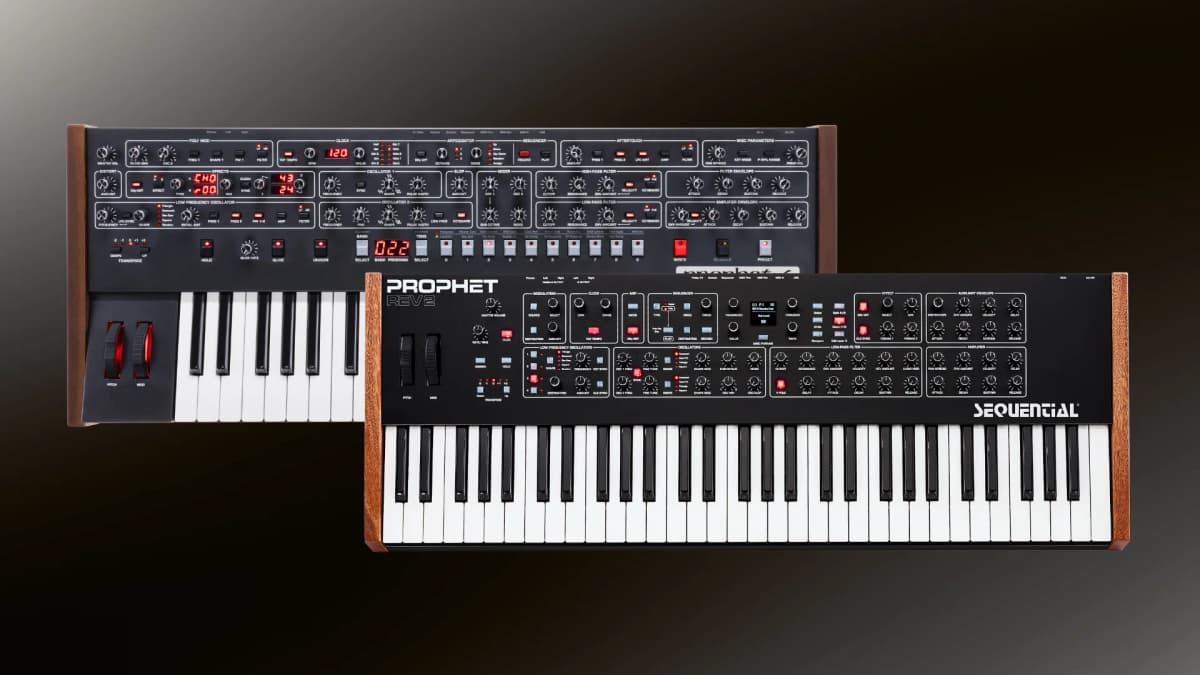
Prophet-6 vs Prophet Rev2: how do they differ? Sound, controls and value compared, based on Jameson Nathan Jones’s hands-on test.

Bernardo de Azevedo
Bernardo de Azevedo
· Updated
Sequential Prophet-6 vs Sequential Prophet Rev2 comparison

Choosing between the Prophet-6 and the Prophet Rev2? This Prophet-6 vs Prophet Rev2 comparison summarizes what Jameson Nathan Jones found when testing both instruments, so you can see how they differ in sound, controls and value before you buy.

The Prophet-6 and the Prophet Rev2 are both analog polysynths from the same lineage, both are Sequential instruments, and both have earned the label “modern classic”. It is easy to assume that the Rev2, with more voices, more modulation and a lower price tag, is simply the better deal. The musician behind this comparison owns both, and his experience is a useful corrective: the better choice depends on what you want a synth to do inside your music.

Jameson Nathan Jones frames the question from lived experience. The Rev2 was his main analog polysynth for years. Then he bought a Prophet-6 and kept both. His explanation of why is a good guide to the real differences.

Source video: Prophet 6 vs Rev 2 – Sequential Showdown (and why I own both) (Jameson Nathan Jones, YouTube)

Table of Contents

  • The Rev2: a sound design machine
  • The Prophet-6: the instrument that fills the room
  • Limitations that work as a feature
  • Which one makes more sense?

The Rev2: a sound design machine

The reviewer describes the Rev2 as a synth with up to 16 voices, four LFOs, an extra ADSR, more effects, a mod matrix and an extra octave on the keyboard. It is also bi-timbral, which means you effectively have two Rev2 engines stacked in one instrument, each with separate outputs. In his own use, though, he rarely uses the two layers, because he prefers having every control visible while he turns it. Switching between layers loses what he calls the knob-per-function feel.

The four LFOs are central to the sound design appeal, with one important caveat. They are not globally synced. Each voice starts its own LFO, and the only sync options are clock sync and key sync. For slow, evolving pads where each note drifts a little differently, that is a strength. For rhythmic patches that need a single global LFO phase, it becomes a limitation.

The Rev2 also layers well in a busy mix, in his view, partly because it lacks the low-mid weight of the Prophet-6. He is clear that this is also part of the reason he went looking for another synth.

However the Prophet-6 vs Prophet Rev2 debate plays out for you, the best test is still playing both instruments side by side.

The Prophet-6: the instrument that fills the room

The Prophet-6 is where his enthusiasm is most obvious. He calls it the best sounding analog polysynth he has ever heard, possibly rivaled only by the Prophet-5 and, arguably, the OB-6. The key technical difference he points to is the oscillator design: voltage-controlled oscillators in the Prophet-6 versus digitally controlled oscillators in the Rev2. Both are analog instruments, but the reviewer says the digitally controlled approach offers a bit more stability while the voltage-controlled oscillators simply pack more punch.

That punch has practical consequences. The Prophet-6 can take center stage in a mix, and he notes the common complaint that it can be too powerful and needs to be carved with EQ. His answer is that this is how mixing works: it is easier to start with a heavy instrument and take things away than to try to add weight to a thin one.

In the Prophet-6 vs Prophet Rev2 comparison, price and playability matter as much as raw sound.

Limitations that work as a feature

On paper the Prophet-6 has fewer tools than the Rev2. It has one LFO instead of four, no mod matrix, a limited set of routing options and two ADSRs instead of three. The reviewer does not treat that as a weakness. He argues that the interface is thoughtfully designed, and that the routing you do have can lead to interesting results you might not reach with infinite possibilities.

He also points to the Prophet-6’s two filters, including a high-pass filter in the effects section that can help carve space for the synth in a mix. By contrast, he mentions that the Rev2 can do things the Prophet-6 cannot, such as routing noise as a modulation source to the filter cutoff, which he describes as one of his favorite tricks.

The Prophet-6 vs Prophet Rev2 question rarely has a single right answer, because it depends on how you actually work.

Prophet-6 vs Prophet Rev2: which one makes more sense?

His summary is practical. Choose the Rev2 if you want a versatile sound design instrument with evolving pads, more voices and more modulation, and if value matters, since he notes it is also cheaper. Choose the Prophet-6 if you want one great analog polysynth that can be the featured sound in a production, particularly if your mix is not already crowded.

The most honest part of his conclusion is that he would be hard-pressed to pick a favorite. That is exactly why this comparison is interesting: the two synths do not sit on a single scale from better to worse. They solve two different musical problems.

That is the Prophet-6 vs Prophet Rev2 decision in short: match the instrument to the sound and workflow you actually want, and weigh the price difference before you commit.

If you are still undecided in the Prophet-6 vs Prophet Rev2 matchup, think about which controls you would reach for every day.

Related comparisons

Sources

Bernardo de Azevedo
Written by
Bernardo de AzevedoFounder & Editor

His connection with music began at age 6, in the 1980s, when his father introduced him to Jean-Michel Jarre's Rendez-Vous on vinyl. He works professionally in the legal field, while synthesizers became his space for abstraction and creative exploration. Founder of The Synth Source.