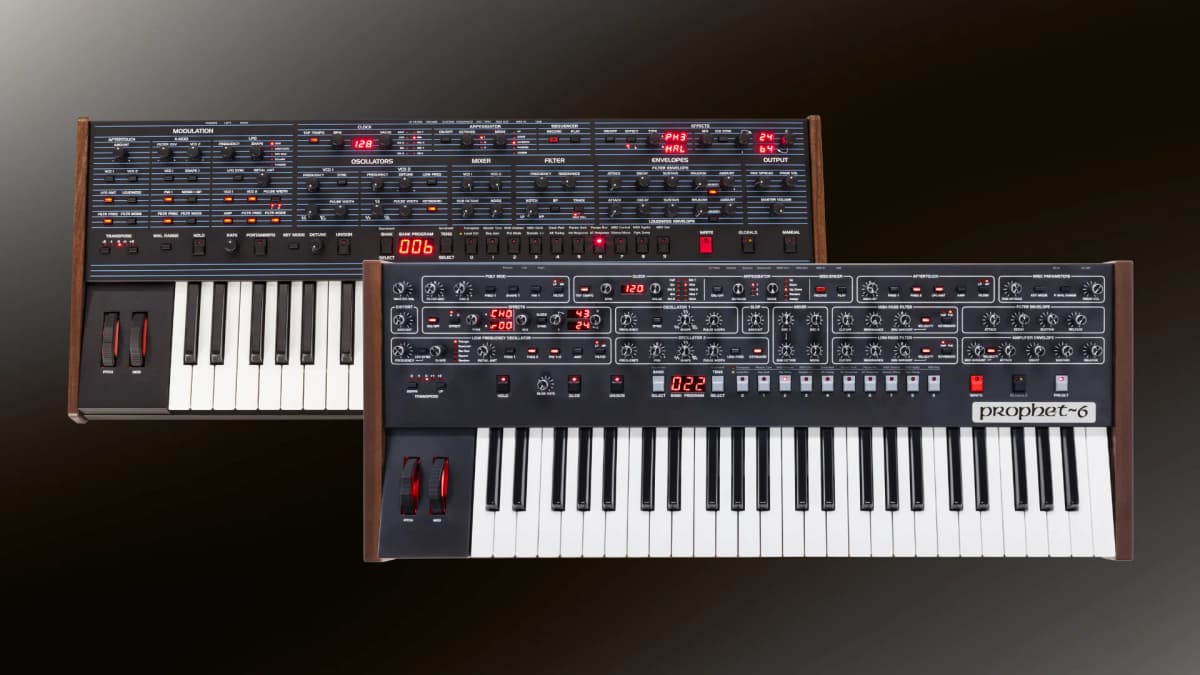
In use, this changes what each synth is good at. The notch is special. By blending between low pass and notch and modulating the frequency, he gets rich, hollow lows with sparkle at the top. He adds that soft synths, and the Access Virus, can get pretty close to a notch like that, but that the hardware still sounds beautiful. The Prophet-6, by contrast, is the more standard-sounding instrument and can get more mainstream sounds more easily.
In the OB-6 vs Prophet-6 comparison, price and playability matter as much as raw sound.
Sub oscillator, unison and the effects
He also compares the sub oscillators, which differ in shape, one square and one triangle. For bass work the difference matters: the square sub gives a gritty low end, while the triangle sits underneath the sound rather than being part of it. Unison across all six voices with detune gives a rich, huge sound on both, but he is struck by how different they are.
The effects sections are essentially the same in function. The Prophet-6 has an independent distortion control on the panel, while on the OB-6 he reaches distortion with a hold-and-turn button combination. He also notes the editors cost around $60 to $90 and are not as solid as the Sub 37 editor.
The OB-6 vs Prophet-6 question rarely has a single right answer, because it depends on how you actually work.
OB-6 vs Prophet-6: which one makes more sense?
When he tries to make the same type of sound on each, he finds each wins in different places. For an OB-style bass, he prefers one; for smooth, pretty lines, the other. His summary is that if you can have only one polysynth, the more standard and flexible one is the safer pick, while the instrument with the SEM filter offers something different that is special if you already own other polys.
That is the OB-6 vs Prophet-6 decision in short: match the instrument to the sound and workflow you actually want, and weigh the price difference before you commit.
Related comparisons
Sources