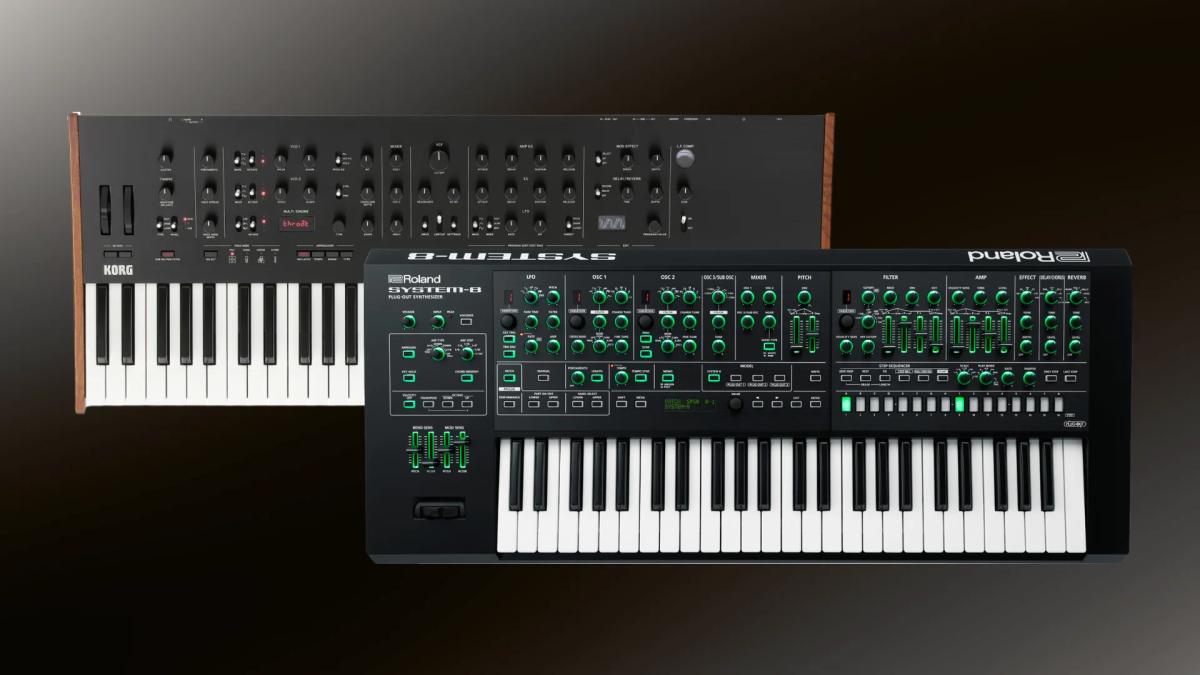
In the Prologue vs System-8 comparison, price and playability matter as much as raw sound.
Digital engines
What makes the Prologue special, in his opinion, is its hybrid structure. It is analog, but with a multi-engine digital oscillator that can load user waveforms, engines or effects through open-source programming, and he understands a sample loader is coming. That kind of third-party extension is something the System-8 cannot do. The System-8 has standard Roland digital waves such as super saws and super squares, with variations of each, noise, logic, FM and vowel types. He admits he is lost with the FM algorithms, which are organised in popular arrangements.
Effects
Both have good effects sections. The Prologue combines delay and reverb as an either/or, with an independent modulation effect and sync options. The System-8 has a dedicated reverb with many types (hall, arena, early reflections, space, even submarine horror), a delay/chorus section and a more standard section with phasers, bit-crushers, overdrive, metal zone and fuzz. He points out you can also run external audio through the System-8’s effects.
Prologue vs System-8: which one makes more sense?
He leaves the final choice to viewers, but the comparison points one way each. The Prologue has real analog circuitry, warmth, a unique single filter and an expandable digital engine. The System-8 gives you a huge range of classic Roland filters, plenty of digital oscillators and effects and rock-solid tuning. If you want a single instrument that can be several vintage Rolands, choose the System-8; if you want a characterful analog-digital hybrid you can extend, the Prologue is the one.
That is the Prologue vs System-8 decision in short: match the instrument to the sound and workflow you actually want, and weigh the price difference before you commit.
Related comparisons
Sources