Home›Reviews›OB-6 vs Prologue: Raw SEM character or deeper multi-eng…
Reviews

OB-6 vs Prologue: Raw SEM character or deeper multi-engine sound design?

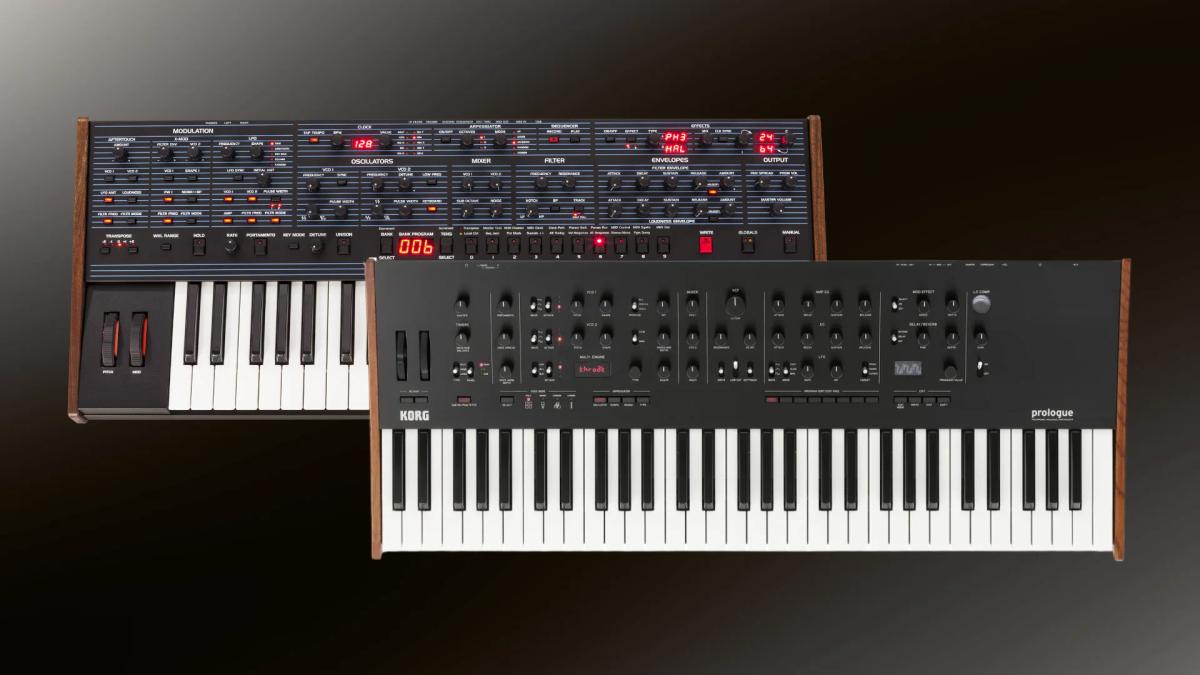
OB-6 vs Prologue: how do they really differ? We break down sound, controls and value from Devin Belanger’s hands-on video test to help you choose.

Bernardo de Azevedo
Bernardo de Azevedo
· Updated
Sequential OB-6 vs Korg Prologue comparison

Choosing between the OB-6 and the Prologue? This OB-6 vs Prologue comparison summarizes what Devin Belanger found when testing both instruments, so you can see how they differ in sound, controls and value before you buy.

Devin Belanger, who releases music as Miles Away, is a self-declared champion of the Korg Prologue, which he considers one of the most underrated synths on the market. After a video on the Sequential OB-6, viewers asked him to compare the two. He keeps it informal, concentrating on workflow and vibe rather than oscilloscope measurements. His summary up front: the OB-6 excels at raw character and is pretty unbeatable at it, but the Prologue offers more voices, a multi-engine, better effects and considerably more depth for sound design.

Source video: Sequential OB-6 vs Korg Prologue: choosing the best VCO Analog Polyphonic Synthesizer (Devin Belanger, YouTube)

Table of Contents

  • Oscillators
  • Filters and resonance
  • Sound design, modulation and effects
  • Which one makes more sense?

Oscillators

With two initialised patches and sawtooth oscillators, he hears many similarities. Both are real VCOs, “perfectly imperfect” as they beat against each other. The OB-6 is brighter, with a bit more body in the Prologue. The Prologue’s far greater number of voices makes it easier to get that lovely ringing-out tone.

The OB-6 earns points here: continuously variable wave shapes, a nicer square wave and a nicer triangle, which he says is usable on its own. A practical example is that with one oscillator halfway between sawtooth and square and PWM applied from an LFO, the OB-6 can simulate two oscillators beating against each other, freeing the second oscillator for cross-mod. The Prologue cannot do this. On the Prologue, the noise source lives inside the user oscillator bank, so a sub oscillator costs you the noise.

However the OB-6 vs Prologue debate plays out for you, the best test is still playing both instruments side by side.

Filters and resonance

Both have 12 dB filters, but that is where the similarity ends. The Prologue has a low-pass with an adjustable high-pass switch and a built-in drive. The OB-6 has no drive and no separate high-pass but a multimode SEM filter with low-pass, notch, high-pass and band-pass. Without resonance the two are similar. With resonance, he says you can hear why you pay the extra money for the OB-6: it is silky smooth and musical.

The Prologue has a distorted, snarling, almost MS-20-style filter that he loves personally and that is why he would never sell it. The Prologue’s low-cut can be used with distortion for aggressive tones.

In the OB-6 vs Prologue comparison, price and playability matter as much as raw sound.

Sound design, modulation and effects

In a plucky patch the OB-6 has an amazing fizz, even when played quietly, which he attributes to the SEM filter and describes as retro and nostalgic. The Prologue, being Japanese, is sharper and more exact, yet still warm and lush because it is all VCOs. He recalls someone describing it as cold and dystopian, “an analog retro version of what the future would be”.

The Prologue wins on several fronts. It has 16 voices, so there is no voice stealing, and 16 LFOs, one per voice, with LFO voice sync switchable off. It is multi-timbral, layering patches, has a multi-engine with user oscillators, and its reverb is “absolutely superior”, with a digital distortion he even prefers to the analog one. On the OB-6 side, he came to like the chorus and BBD delay, and its unison mode in six voices sounds massive. The OB-6’s square wave with the mod wheel gives a clean unipolar octave cascade.

The OB-6 vs Prologue question rarely has a single right answer, because it depends on how you actually work.

OB-6 vs Prologue: which one makes more sense?

He feared the OB-6 would overlap with the Prologue but found the opposite: each has its own special place. Choose the OB-6 for that raw, silky SEM character and bread-and-butter sounds. Choose the Prologue if you want more voices, more modulation, better effects and a deeper sound-design toolkit at a lower price.

That is the OB-6 vs Prologue decision in short: match the instrument to the sound and workflow you actually want, and weigh the price difference before you commit.

Related comparisons

Sources

Bernardo de Azevedo
Written by
Bernardo de AzevedoFounder & Editor

His connection with music began at age 6, in the 1980s, when his father introduced him to Jean-Michel Jarre's Rendez-Vous on vinyl. He works professionally in the legal field, while synthesizers became his space for abstraction and creative exploration. Founder of The Synth Source.