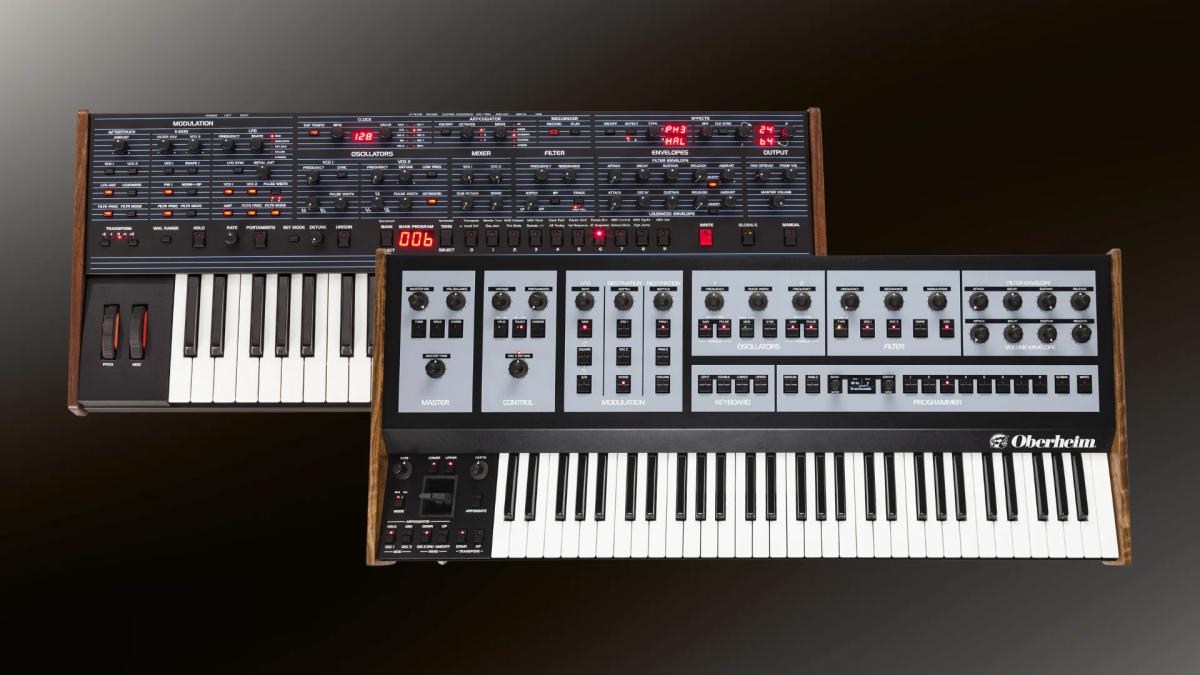
The OB-6 is brighter without resonance, which is a reason some people call it thin, though he does not find it so. The OB-X8 is darker by design and needs keyboard tracking or envelope modulation to open up. At high resonance, however, he prefers the OB-X8, and he calls its full-resonance sound the best-sounding filter he has had. His summary is neat: the OB-6 filter is more versatile because of the morph, but each individual component on the OB-X8 gives more options and sounds a little better.
In the OB-6 vs OB-X8 comparison, price and playability matter as much as raw sound.
Modulation and the details of workflow
The OB-6 has a single global LFO with unusual destinations, including filter mode, plus a cross-modulation section that can use oscillator 2 as a second LFO, as FM, or take the filter envelope to pitch, shape and pulse width, positive or negative. The OB-X8 has a separate vibrato LFO and a main LFO routed to two buses with their own amounts, and, because it is bitimbral, effectively two LFOs at two rates. Its cross-mod is more limited, and the most useful option is hidden in a menu.
He is not sure which is better, but he finds the OB-6 more straightforward and the OB-X8 more capable if you accept the workarounds. The same pattern appears in stereo spread: a knob on the OB-6, menu modes such as splay and ping-pong on the OB-X8.
The OB-6 vs OB-X8 question rarely has a single right answer, because it depends on how you actually work.
Effects, extras and what only one synth can do
The OB-6 has a full effects section, with a good digital chorus, a nice phaser and what he calls his favorite effect, the analog distortion. He finds the reverbs poor. It also has a sequencer and a sub oscillator, which he thinks makes it better for bass sounds than the OB-X8.
The OB-X8’s headline feature is its split and double modes, which the OB-6 cannot do. Double mode layers two sounds at the cost of half the polyphony, and he loves it, though he finds the implementation awkward since you commit to the preset and cannot edit its parts at the same time.
OB-6 vs OB-X8: which one makes more sense?
Taken together, his sections point to a clear split. The OB-6 is the more direct, more compact and better-equipped synth for bass, effects and sequencing. The OB-X8 is the one to buy for richer oscillator interaction, deeper filter options at high resonance and the bitimbral modes. Which one fits depends on whether you want a single elegant instrument or a larger palette that asks you to dig.
That is the OB-6 vs OB-X8 decision in short: match the instrument to the sound and workflow you actually want, and weigh the price difference before you commit.
Related comparisons
Sources