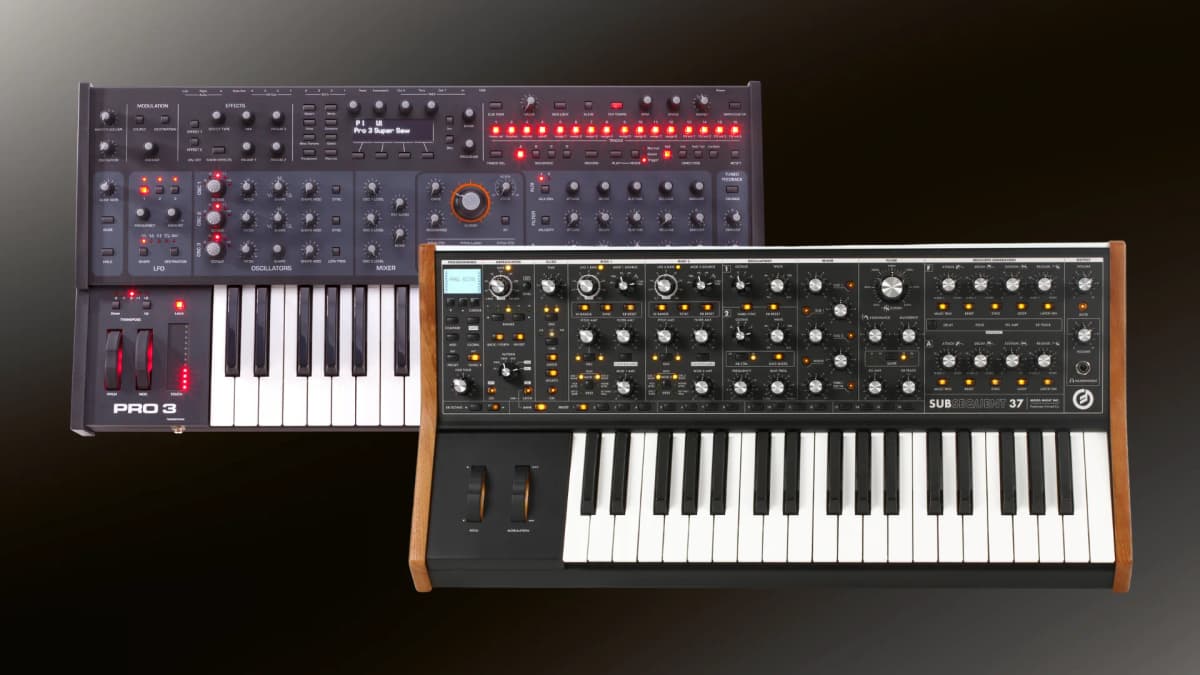
In the Pro 3 vs Subsequent 37 comparison, price and playability matter as much as raw sound.
Interface and sequencer: where the gap opens
Both synths have small LED screens and plenty of dedicated controls, but he prefers the Pro 3’s implementation. Its screen has dedicated navigation controls and acts as a secondary controller. Turn the envelope attack knob and it shows a graphical envelope with quick access to further pages. On the Moog, the screen is navigated by wiggling the fine-tune knob, and its brightness and contrast are more fatiguing to the eyes. He also notes that the tilted Moog panel is wonderful for ergonomics, although the LEDs can make labels hard to read in low light.
The sequencer is the largest gap. He is frank that built-in sequencers are often an afterthought, and the Moog’s is exactly that for him: reliant on button combinations that he has learned and forgotten repeatedly. The Pro 3, by contrast, offers step sequencing with 16 lanes of modulation sequencing and the ability to sequence external gear via MIDI or CV, presented in a way he calls inspiring and surprisingly easy.
For live playing the Moog remains a phenomenal performance machine, but he finds the Pro 3 does it a little better.
The Pro 3 vs Subsequent 37 question rarely has a single right answer, because it depends on how you actually work.
Pro 3 vs Subsequent 37: which one makes more sense?
His final verdict is that the king of his studio has been usurped: the Pro 3 reigns supreme, offering more bang for the buck and, in his opinion, about as close to a perfect synth as we are likely to get. The one exception is the sound that only the Subsequent 37 can deliver, which he considers a strong enough reason to choose the Moog.
That is the Pro 3 vs Subsequent 37 decision in short: match the instrument to the sound and workflow you actually want, and weigh the price difference before you commit.
If you are still undecided in the Pro 3 vs Subsequent 37 matchup, think about which controls you would reach for every day.
Related comparisons
Sources