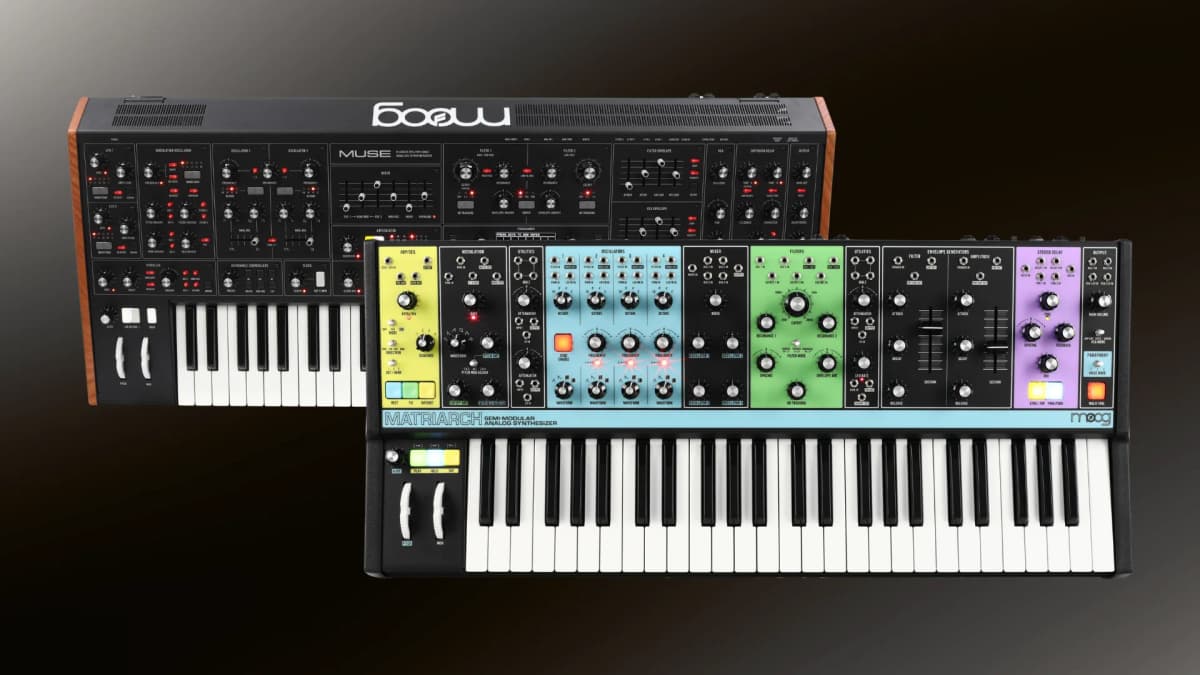
Polyphonic versus paraphonic
Another major difference is architecture. The Muse is polyphonic, so each note behaves independently, while the Matriarch is paraphonic, which changes how chords respond. He considers the Matriarch best used for leads, basses and arpeggios, where its paraphonic nature is part of the fun, not a limitation.
In the Muse vs Matriarch comparison, price and playability matter as much as raw sound.
Build, layout and price
On build quality he is unambiguous. The Muse is on a different level, with solid buttons and knobs, a wonderful keyboard with an extra octave, a dedicated low cut, a beautiful design and wood in the casing. He says it took him only ten minutes to feel comfortable doing basic synthesis on it. The Matriarch is well made, with nothing wobbly, but its plastic casing does not feel as premium.
He also comments on the market. The Muse is about twice the price of the Matriarch on the used market, and used Matriarch prices have dropped by 20 to 30 percent since the Muse launched. He loves the Matriarch’s onboard sequencer and arpeggiator and its one-knob-per-function layout.
Muse vs Matriarch: which one makes more sense?
If he had to choose one main synth, the Muse is the safer pick, since it can do everything. The Matriarch makes sense if you know clearly that you want fat, detuned leads and punchy bass. The only other instruments he compares to the Matriarch’s raw directness are hardware such as the Vermona Performer and the MFB Synth Pro.
That is a useful way to frame the decision: not which synth is better, but whether you want one that does everything or one that does a few things in a way that hits you in the chest.
That is the Muse vs Matriarch decision in short: match the instrument to the sound and workflow you actually want, and weigh the price difference before you commit.
Related comparisons
Sources