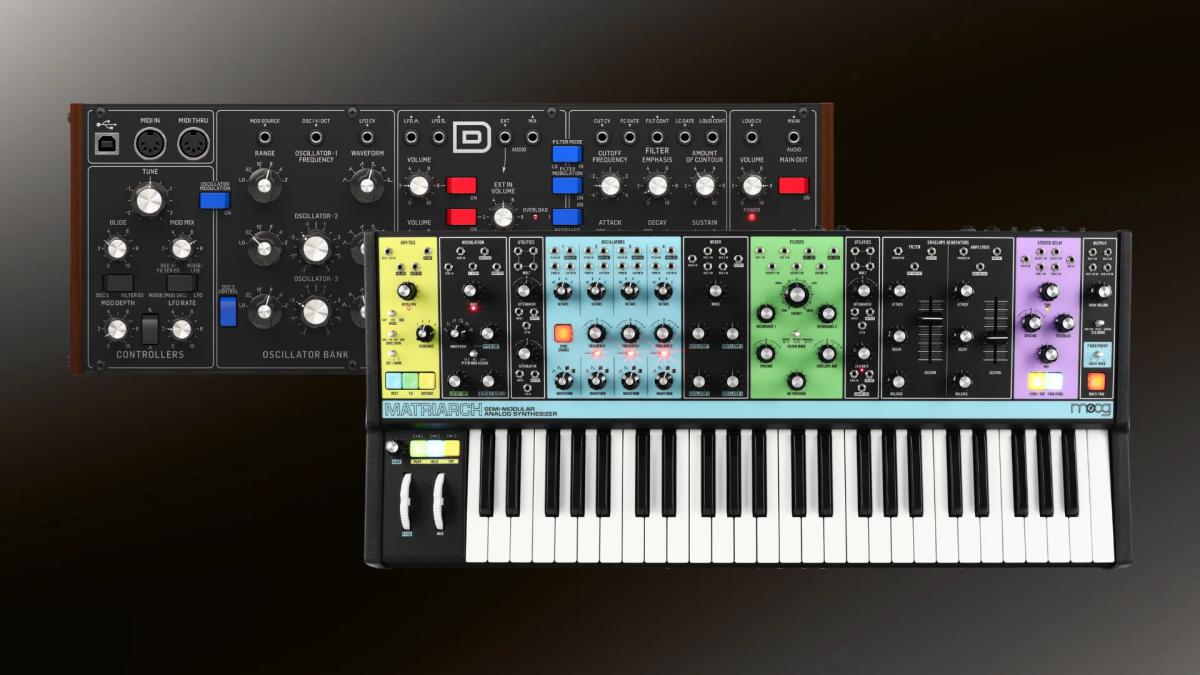
In the Model D vs Matriarch comparison, price and playability matter as much as raw sound.
Oscillator stacking and the square wave
Adding a third oscillator, a square wave at the same pitch as the first, changes the Model D’s tone and removes some of that focused quality. On the Matriarch the same move makes the sound wide and gushy, an effect based on pulse width modulation that the Model D cannot do. Detuning the oscillators gets close but not really: it is a different kind of sound and does not get as wide. The Matriarch also has a fourth oscillator, which he adds an octave up on a sawtooth for a very big sound.
The Model D vs Matriarch question rarely has a single right answer, because it depends on how you actually work.
Expression and the final verdict
Another area where the Matriarch pulls ahead is expression. He has aftertouch patched to the filter envelope amount and can route velocity wherever he likes, to the filter or the VCA. He says that is why he loves the Grandmother: it can feel less like a synthesizer and more like a musical instrument, and you will never get that from the Model D.
Model D vs Matriarch: which one makes more sense?
He admits the Behringer has made him lust after a real Minimoog, but it has also made him love the Matriarch and Grandmother even more. Still, he finds a place for the Model D in his world. The practical reading: the Model D is the direct, focused mono bass and lead machine at a modest price. The Matriarch is the wider, stereo, expressive, more flexible instrument that responds like an instrument you can play.
That is the Model D vs Matriarch decision in short: match the instrument to the sound and workflow you actually want, and weigh the price difference before you commit.
Related comparisons
Sources