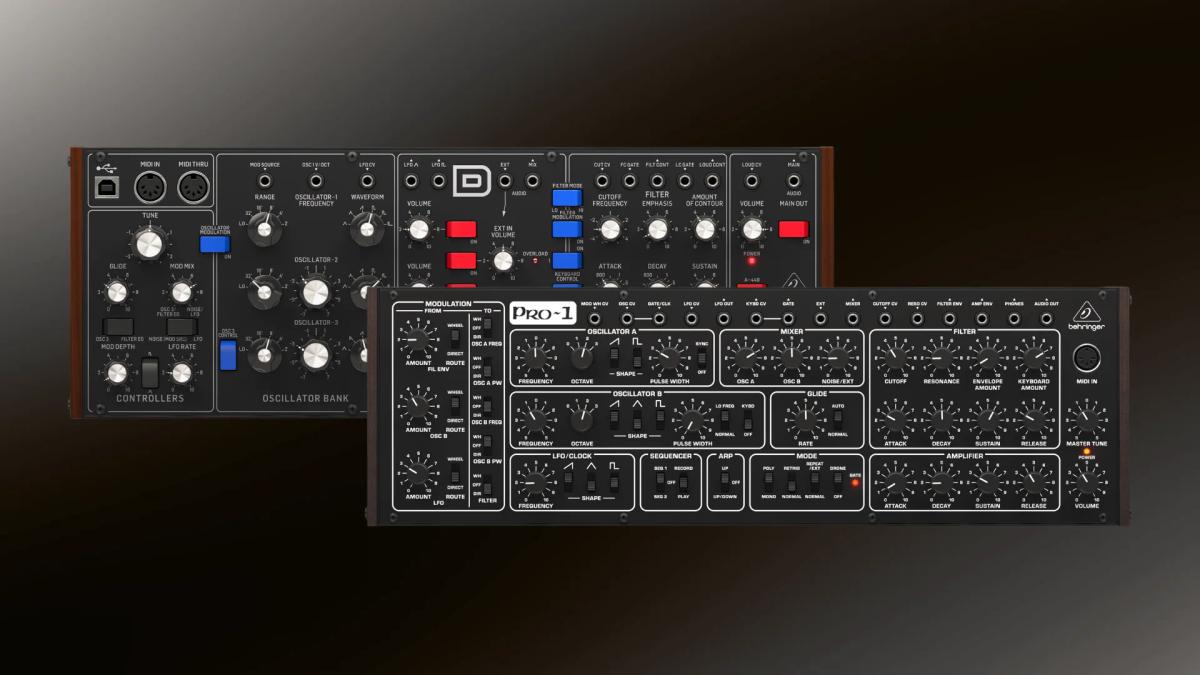
Sound character: classic Moog against its own voice
The Model D may be a little more limited in sound capabilities, but it nails classic Moog sounds without even trying: classic basses, classic leads, all very quickly. The Pro-One has its own sound and you do not really find those classic Moog tones in it. It is more diverse but takes more time to dial in the specific sound you need. On the Model D, the simplicity makes it easier to reach specific sounds, whereas on the Pro-One you may spend more time in the oscillator section because there is more to explore.
In the Model D vs Pro-One comparison, price and playability matter as much as raw sound.
Leads, bass and patching
Both can make amazing basses and great leads, but he thinks the Model D wins in leads. He goes as far as saying it may be the best lead synthesizer he has ever owned. In patching, both are at about the same level of complexity, and both have solid knobs and a solid build.
Model D vs Pro-One: which one makes more sense?
His advice is straightforward. If you want classic Moog sounds very quickly, especially leads, the Model D is almost a no-brainer for the price. If you are not a big Moog fan and want more diversity, the Pro-One may be the one. He singles out industrial music in particular: the Pro-One’s fast envelopes and its pulse-wave manipulation suit industrial basses and that niche well. After at least two months with each, that is his opinion, and he invites owners of both to add their own experience in the comments.
That is the Model D vs Pro-One decision in short: match the instrument to the sound and workflow you actually want, and weigh the price difference before you commit.
Related comparisons
Sources