Home›Articles›Moog Music: The inventor who lost his own name and spen…
Articles

Moog Music: The inventor who lost his own name and spent years winning it back

Moog Music: In June 2002 a company in Asheville, North Carolina, announced that it was taking back the name Moog Music. The news sounds like a formality,…

Bernardo de Azevedo
Bernardo de Azevedo
· Updated
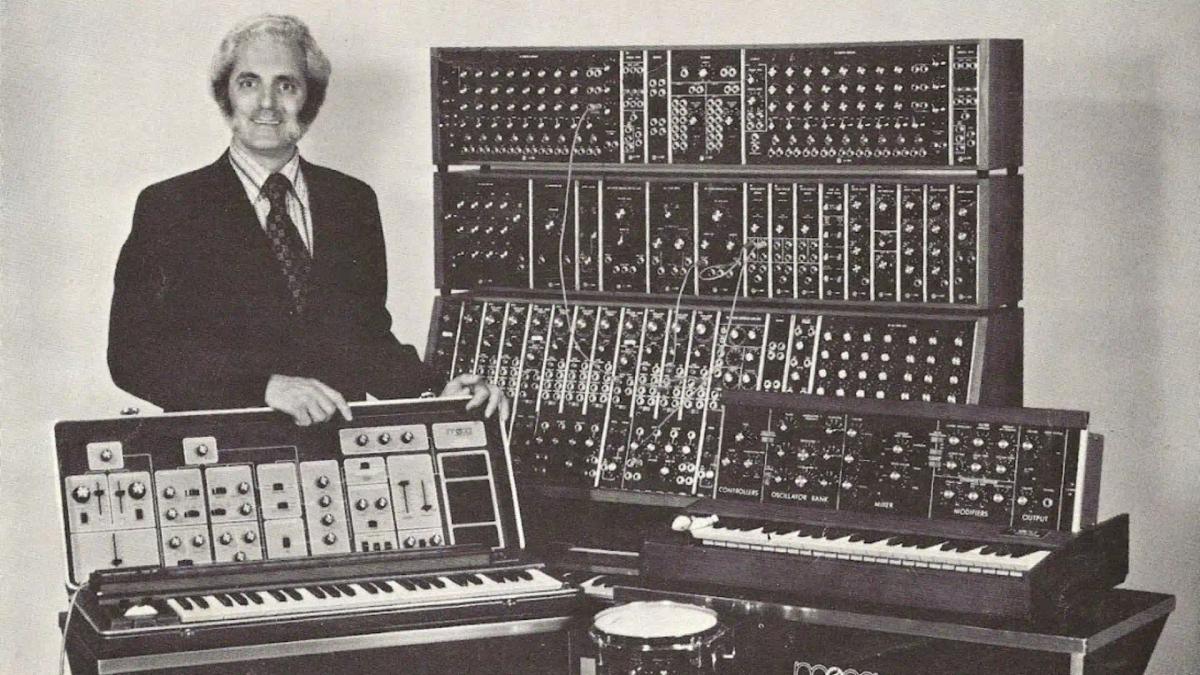
Moog Music - historic photo

In June 2002 a company in Asheville, North Carolina, announced that it was taking back the name Moog Music. The news sounds like a formality, because Robert Moog had been synonymous with the word for decades. In fact the name had spent years in other hands, and the man who invented the instrument family could not legally sell products under his own surname.

The story of Moog Music is usually told through its instruments, from the modular systems of the 1960s to the Minimoog. The business story is stranger. A company built on a founder’s reputation was sold, renamed, run into bankruptcy, and then its name was picked up by someone else. The question is how that happened, and what it cost the founder to reverse it.

Table of Contents

  • Moog Music: a family business that never stayed in the black
  • Sold, renamed and absorbed by Norlin
  • The Memorymoog and the last Norlin-era synthesizer
  • Big Briar: working without the name
  • How the Moog name slipped away
  • The return of Moog Music in 2002
  • Final perspective

Moog Music: a family business that never stayed in the black

Robert Moog started in a very small way. According to Wikipedia, he and his father founded R. A. Moog Co. to sell theremins and theremin kits by mail order from the family home in Queens, New York. The year is given as 1953 on the company page and 1954 on Moog’s biography page, so sources differ by a year. The company opened its first commercial space at 41 East Main Street in Trumansburg, New York, in 1963.

By 1967 the business centered on large modular synthesizers. The same article says the company was often in debt and turned a profit in only one year, 1969. That detail matters for what follows. The instrument that made the name famous was never the foundation of a comfortable business. The portable Minimoog arrived in 1970, but the company’s finances stayed precarious.

Sold, renamed and absorbed by Norlin

In November 1971, according to Wikipedia, the rival firm muSonics bought the company and moved it to Williamsville, New York. It was renamed Moog Musonics and then Moog Music, Inc. Gearnews dates the Moog Music name to 1972. In 1973, after a recession, the company passed to Norlin, a larger musical instrument group. Moog’s own biography page places his sale to Norlin in 1971, so the sequence of owners is described differently depending on the source.

What is consistent is that Moog stayed on as a designer. His contract ran until 1977, and Wikipedia notes that Norlin moved the business to Cheektowaga, New York, in 1976. During those years competition grew. The company page names ARP, Oberheim and Sequential Circuits, with its Prophet-5, along with Roland, Korg and Yamaha, as rivals that took market share. A firm named for an inventor who no longer controlled it was now fighting on several fronts.

The Memorymoog and the last Norlin-era synthesizer

The clearest sign of that struggle is the Memorymoog, made from 1982 to 1985. Wikipedia lists it at US$4,795. It had six voices, each with three oscillators, which led people to call it six Minimoogs in one box. It stored 100 patches, which Wikipedia counts among the features that set it apart from the Prophet-5 and the Oberheim OB-Xa, and the oscillators were Curtis CEM 3340 chips rather than discrete Moog circuits.

It was an ambitious machine and a difficult one. The same article describes reliability problems and a reputation for poor road performance, and notes that factory updates improved its tuning. A later upgrade called the LAMM, introduced in 1992 with Big Briar, replaced critical components. The Memorymoog was the last polyphonic synthesizer Moog Music released before the company declared bankruptcy in 1987, which gives the instrument a poignant place in the timeline. Wikipedia adds that the company’s failed attempt to pivot to digital synthesizers preceded that bankruptcy.

Big Briar: working without the name

Bob Moog left Norlin after his contract ended in 1977. The Wikipedia pages place the start of his next company, Big Briar, in 1977 or 1978, and Sonic State’s 2002 press release says he moved to western North Carolina in 1978. Big Briar worked on controllers, modules and theremins, and Moog also consulted for others. According to Wikipedia, he was a consultant and vice president of new product research at Kurzweil Music Systems between 1984 and 1988.

The company later made the Moogerfooger effects pedals, which Wikipedia says were produced from 1998 until 2018. Sound on Sound notes that Moog Music has operated in Asheville since July 1994 and that the Etherwave theremin arrived in 1996. This is the less-told middle chapter. The inventor of the world’s best-known synthesizer spent years making peripherals and theremins under a company name that did not include his own.

How the Moog name slipped away

The loss of the name happened in stages. Wikipedia says the Moog Music trademark expired in 1994 and was bought by Don Martin. Gearnews likewise says Martin obtained the Moog Music name that year. Martin started a new company under that name and made modules and Minimoog D clones. A page on modularsynthesis.com, a site devoted to Moog history, describes him as neither an experienced engineer nor an experienced businessman, and says he defaulted on purchases made on credit, was understaffed and drew impatient customers.

The awkward part is the gap between the name and the man. A product line carried the Moog name while Robert Moog himself ran Big Briar. Moog told Sound on Sound that he had used his own signature as a trademark before the matter was settled, so his products were not entirely without his name.

The return of Moog Music in 2002

How the name came back depends on who is telling it. The June 24, 2002 press release reproduced by Sonic State says the original Moog Music, Inc. stopped operating in the mid-1980s and that the name was used without authorization until a court ruled in Moog’s favor. The modularsynthesis.com page also says he sued and won.

In a March 2003 Sound on Sound interview, though, Moog said there had never been a lawsuit and that he settled with Don Martin, his main adversary, after a process of three or four years. The same interview calls the recovered trademark the most significant development of 2002.

Whatever the legal route, the outcome was clear. Big Briar changed its corporate name to Moog Music, and Wikipedia gives 2002 as the year the trademark returned. The press release named Michael J. Adams as president, freeing Moog to focus on development and quality control, and announced the Minimoog Voyager, described as the first new Minimoog in thirty years. The Independent Weekly reported that production was scheduled to begin on August 14, 2002.

Its August 2002 profile of the company, then a small outfit of seven people with Moog as owner and chief technical officer, said the plan was to build ten synthesizers a day and that 600 signature edition models had been reserved. It also pointed out, for readers who might not know, that the name is pronounced like “vogue”.

The timing was fortunate. The 2002 press release noted that Moog had also received a technical Grammy that year, and Sound on Sound reports that the ceremony took place in Los Angeles in early 2002. The recognition of his technical work and the return of his surname therefore arrived in the same few months, which made 2002 an unusually good year for a man who had spent so long outside the brand he created.

Final perspective

The history of Moog Music shows how fragile the link between a name and a person can be. Robert Moog built an industry around his surname, then sold the business that carried it, and later found that a trademark could expire while its original owner was busy elsewhere. Getting it back required years of legal effort, and even today sources disagree on whether that effort was a lawsuit or a settlement.

The ending was happier than the middle. Moog lived to see the company reopen under his name, and he died in Asheville on August 21, 2005, at the age of 71. The lesson is practical as much as sentimental: in a business where the brand is the product, owning your name is part of the instrument.

Related stories

Sources

Bernardo de Azevedo
Written by
Bernardo de AzevedoFounder & Editor

His connection with music began at age 6, in the 1980s, when his father introduced him to Jean-Michel Jarre's Rendez-Vous on vinyl. He works professionally in the legal field, while synthesizers became his space for abstraction and creative exploration. Founder of The Synth Source.