Home›Reviews›Monopoly vs Poly D: Two Behringer paraphonic keyboards …
Reviews

Monopoly vs Poly D: Two Behringer paraphonic keyboards at the same price

Monopoly vs Poly D: how do they really differ? We break down sound, controls and value from John Trasher’s hands-on video test to help you choose.

Bernardo de Azevedo
Bernardo de Azevedo
· Updated
Behringer Monopoly vs Behringer Poly D comparison

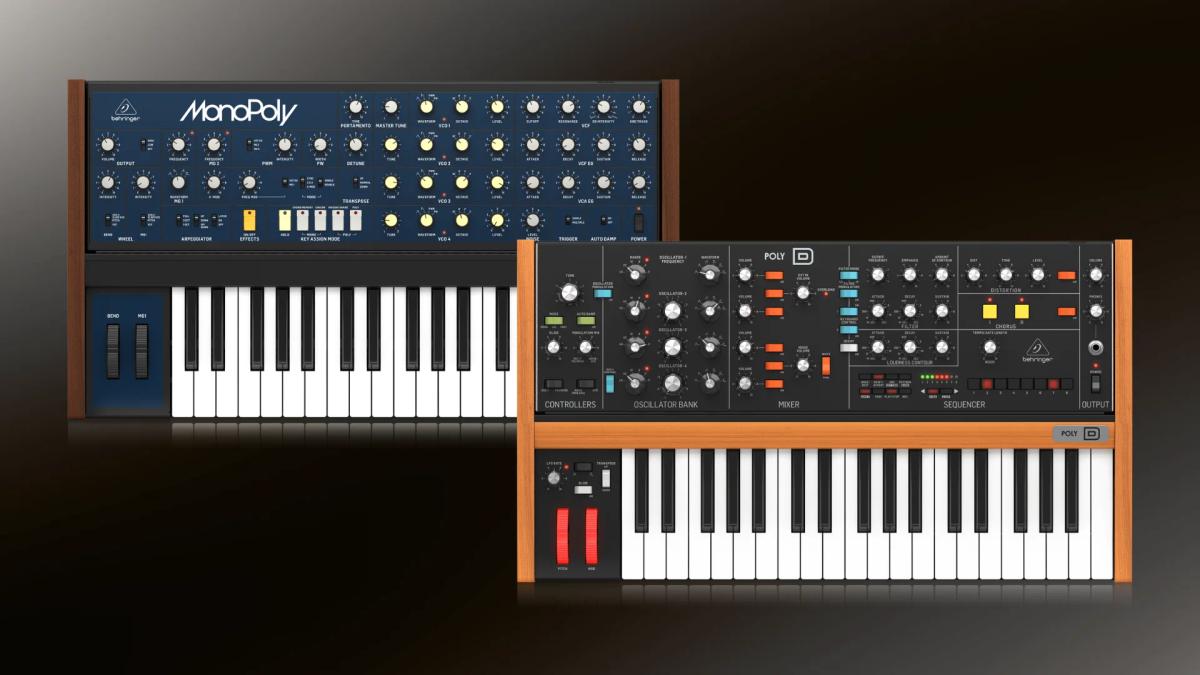
Choosing between the Monopoly and the Poly D? This Monopoly vs Poly D comparison summarizes what John Trasher found when testing both instruments, so you can see how they differ in sound, controls and value before you buy.

John Trasher offers what he calls an early comparison of the Behringer Monopoly and Poly D after a couple of days with the Monopoly. Both cost around 700 euros and, although they look like siblings, they offer different things. He promises an objective overview so viewers can reach their own conclusions.

Source video: Behringer MonoPoly vs. Poly D (Análise/Comparação) (John Trasher, YouTube)

Table of Contents

  • Oscillators and waveforms
  • Modulation and the keyboard
  • Build and effects
  • Which one makes more sense?

Oscillators and waveforms

He sets up the same patch on both, matches the output volume and adds reverb and delay. One difference shows up straight away: the Monopoly offers four octave ranges for the oscillators, while the Poly D has six. He also checks the basic waveforms. The Poly D has a sawtooth that the Monopoly does not offer in the same way, and its spectrum has more high frequencies.

The Monopoly has pulse width modulation, which the Poly D does not, and it lets you switch between three different waveforms and control the pulse width either with a fixed level or by modulating with the filter envelope or one of its two LFOs.

However the Monopoly vs Poly D debate plays out for you, the best test is still playing both instruments side by side.

Modulation and the keyboard

The Monopoly has an FM-style cross modulation section with single and double modes, where one oscillator modulates another with an adjustable offset. It is hard to find a sweet spot, he says, but it can produce really aggressive sounds. The Monopoly also has a pitch and mod wheel setup in which the bend wheel can modulate the filter and the mod wheel can have different destinations such as the filter or vibrato.

The keyboard is the same on both in feel and mechanics. The one difference is that the Poly D transmits aftertouch and the Monopoly does not.

In the Monopoly vs Poly D comparison, price and playability matter as much as raw sound.

Build and effects

Build quality feels the same: sturdy, metal with wooden cheeks. The Poly D has more effect options, and he turns on chorus and distortion to compare. In a quick organ-type patch he thinks the Monopoly takes the lead, sounding way cleaner.

Monopoly vs Poly D: which one makes more sense?

He does not name a winner and says he gives an overview for the viewer to decide. The Poly D brings more octave ranges, a sawtooth, aftertouch and more effects. The Monopoly offers pulse width modulation, a more aggressive FM and cross-modulation section, more flexible wheel routing and a cleaner organ tone. Choose according to whether you value the Poly D’s expressiveness and effects or the Monopoly’s modulation and aggression.

That is the Monopoly vs Poly D decision in short: match the instrument to the sound and workflow you actually want, and weigh the price difference before you commit.

If you can, audition the Monopoly and the Poly D in the same room, through the same speakers or headphones, and with the same patch ideas. Start with a basic sound on each, then move on to the kind of part you actually play: a bass line, a pad, a lead or a layered keyboard sound.

Pay attention to how quickly you can get to a sound you like, how the controls feel under your hands and whether you keep reaching for the same instrument. That kind of hands-on time will tell you more about the Monopoly vs Poly D question than any list of specifications.

Related comparisons

Sources

Bernardo de Azevedo
Written by
Bernardo de AzevedoFounder & Editor

His connection with music began at age 6, in the 1980s, when his father introduced him to Jean-Michel Jarre's Rendez-Vous on vinyl. He works professionally in the legal field, while synthesizers became his space for abstraction and creative exploration. Founder of The Synth Source.