Home›Reviews›Minilogue vs Minilogue XD: Retro grit or a fuller, more…
Reviews

Minilogue vs Minilogue XD: Retro grit or a fuller, more flexible engine?

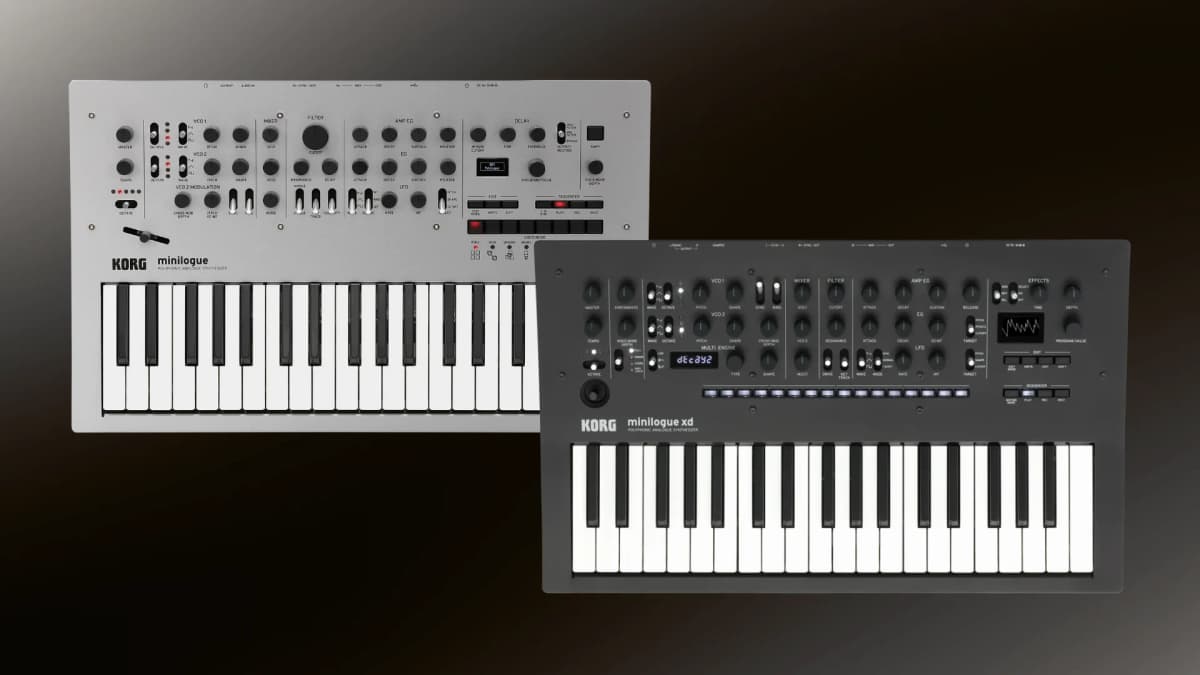
Minilogue vs Minilogue XD: how do they really differ? We break down sound, controls and value from BoBeats’s hands-on video test to help you choose.

Bernardo de Azevedo
Bernardo de Azevedo
· Updated
Korg Minilogue vs Korg Minilogue XD comparison

Choosing between the Minilogue and the Minilogue XD? This Minilogue vs Minilogue XD comparison summarizes what BoBeats found when testing both instruments, so you can see how they differ in sound, controls and value before you buy.

At a glance, the Korg Minilogue and Minilogue XD look like the same instrument with a different label. They share a layout, a four-voice analog concept and a family resemblance. But the producer behind this comparison, who has used the original Minilogue for years and the XD for about a year, makes a persuasive case that they are very different in practice, even when the raw oscillators sound almost identical.

He is upfront about a bias toward the original, which he finds a bit magical. The value of the video lies in how clearly he separates what is shared from what is not.

Source video: Minilogue VS Minilogue XD — Which one is right for you? (BoBeats, YouTube)

Table of Contents

  • The sound: close on paper, different in practice
  • Four reasons they sound different
  • Modulation, voice modes and the details you only notice by playing
  • Which one makes more sense?

The sound: close on paper, different in practice

With raw sawtooth, triangle and square waves, the two are strikingly similar. The one audible difference in the high end comes from the filter: the original has a switchable filter that can be set to two poles or four poles, while the XD has a two-pole filter. Switch the original to two poles and it sounds almost identical to the XD. Set to four poles, it removes more high-frequency content, making the XD a bit brighter by comparison.

The real separation appears once you add effects, filter behavior and the rest of the signal path. In his description, the original is harsher, more metallic, noisier and more retro, while the XD sounds more current, fuller and better served by its effects. He adds in defense of the original that it sounds more unique, and that pads show this particularly well.

However the Minilogue vs Minilogue XD debate plays out for you, the best test is still playing both instruments side by side.

Four reasons they sound different

He summarizes the sonic gap with four points:

  • The filters sound different.
  • The effects sections differ. The XD has three effects, including selectable reverbs, modulation effects and delays, and can load custom effects. The original has one.
  • The XD has stereo outputs, while the original is mono.
  • The oscillator design differs: the original is a two-VCO design, whereas the XD is two VCOs plus a digital oscillator.

That last point matters most. The third oscillator can serve as a sub oscillator or produce a much wider range of tones, and it can host imported user oscillators. The XD also offers selectable noise types, and a filter drive that distorts, amplifies and compresses the sound.

In the Minilogue vs Minilogue XD comparison, price and playability matter as much as raw sound.

Modulation, voice modes and the details you only notice by playing

Where the original claims an edge is in modulation flexibility. He shows how its envelope generator can be assigned to pitch and filter at the same time, and how it can shape the intensity of the LFO, so that a long attack creates a delayed vibrato. That interaction is something he misses on the XD, and he says he has spoken with a Korg engineer about the possibility of routing the envelope to LFO intensity.

Other differences are smaller but real. The original has a velocity tracking switch for the filter, a monophonic mode that adds a sub oscillator, a delay voice mode and a sidechain mode that he has not found a use for. It also has an audio input, which opens up feedback tricks, while the XD offers CV inputs instead.

In practical terms, he notes that tuning stabilizes faster on the XD, while the original can need around ten minutes to warm up. The sequencers work similarly, with 16 steps and four lanes of automation, but he finds the XD’s easier to edit quickly.

Minilogue vs Minilogue XD: which one makes more sense?

For raw character and the unusual modulation routing, he stays loyal to the original. For a fuller sound, stereo output, richer effects and the ability to load custom oscillators and effects, the XD is the more flexible, more contemporary instrument.

The honest conclusion is that these two synths share a family name and a front panel, not a personality.

That is the Minilogue vs Minilogue XD decision in short: match the instrument to the sound and workflow you actually want, and weigh the price difference before you commit.

Related comparisons

Sources

Bernardo de Azevedo
Written by
Bernardo de AzevedoFounder & Editor

His connection with music began at age 6, in the 1980s, when his father introduced him to Jean-Michel Jarre's Rendez-Vous on vinyl. He works professionally in the legal field, while synthesizers became his space for abstraction and creative exploration. Founder of The Synth Source.