Home›Reviews›Memorymoog vs Prophet-5: The flop that should have been…
Reviews

Memorymoog vs Prophet-5: The flop that should have been a hit

Memorymoog vs Prophet-5: how do they differ? Sound, controls and value compared, based on Alamo Music Sound Lab’s hands-on test.

Bernardo de Azevedo
Bernardo de Azevedo
· Updated
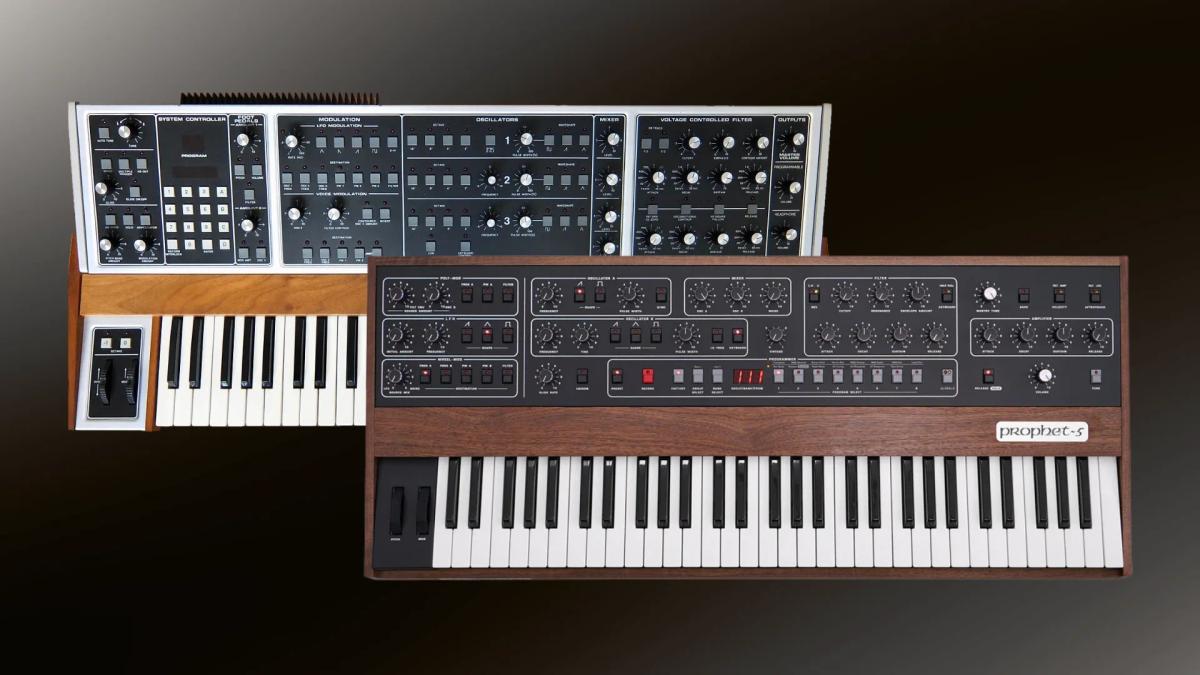
Moog Memorymoog vs Sequential Prophet-5 comparison

Choosing between the Memorymoog and the Prophet-5? This Memorymoog vs Prophet-5 comparison summarizes what Alamo Music Sound Lab found when testing both instruments, so you can see how they differ in sound, controls and value before you buy.

On paper the Memorymoog should have been a runaway success. As Zac Marr of Alamo Music puts it, if the two most famous synths of the 1970s, the Minimoog and the Prophet-5, “shacked up and had a baby”, you would expect a hit. It was not. The Prophet-5 became a workhorse used by seemingly every band, while the Memorymoog arrived late, sold in small numbers and was the last product Moog released before bankruptcy.

His aim is not to declare a winner but to tease out what makes each of these two polyphonic analogue classics special.

Source video: Moog Memorymoog vs. Sequential Prophet-5 | Two Legendary Polyphonic Synths (Alamo Music Sound Lab, YouTube)

Table of Contents

  • Two machines with a shared bloodline
  • Modulation and the LFO
  • Tone and usability
  • Which one makes more sense?

Two machines with a shared bloodline

The Prophet-5, released in 1978, drew inspiration from the Minimoog in its look and layout, and it felt ahead of its time: it had the first digital patch storage and a wealth of modulation options. The Memorymoog came out around 1982, at the tail end of the great analogue poly era, as digital synths like the DX7 took over. He describes it as essentially a six-voice Prophet-5 with a ladder filter.

The design overlap is real. Both use the same Curtis CEM 3340 oscillator chips, and both have hardware (analog) envelopes, which he says tend to have more nuance and flexibility than software ones. The filters differ: the Prophet-5 uses a Curtis filter, while the Memorymoog uses the legendary Moog ladder. The Memorymoog also gives you an extra oscillator.

However the Memorymoog vs Prophet-5 debate plays out for you, the best test is still playing both instruments side by side.

Modulation and the LFO

The Prophet-5’s LFO is analog and lets you select multiple waveforms simultaneously, which he says is rare for synths of the era and creates rhythmic possibilities. The Memorymoog’s LFO offers more waveforms, including sample-and-hold random, though he is almost sure it is not analog and invites corrections.

Both share a polyphonic modulation idea: an oscillator can be switched to low-frequency or audible-frequency mode so that each note modulates its destination at a different rate, producing the crazy sounds for which the Prophet-5 is legendary.

Other differences: the Memorymoog has more envelope control, more keyboard tracking settings, an arpeggiator, a sequencer on some units and MIDI, which makes it feel more modern. On the Prophet-5, glide is available only in unison mode, whereas the Memorymoog allows it in all modes. The Memorymoog’s oscillator A offers three waveforms versus two on the Prophet-5.

In the Memorymoog vs Prophet-5 comparison, price and playability matter as much as raw sound.

Tone and usability

The tonal difference is the heart of the video. The Memorymoog is far more harmonically complex, probably because of the three oscillators, with a lot of movement inside the sound. The Prophet-5 is cleaner, still rich and pleasant, but it does not occupy the whole spectrum the way the Memorymoog does. He says the Prophet-5 is probably much more usable in a multi-part mix, while the Memorymoog is amazing to simply play and let the sound wash over you.

On the used market, he quotes Prophet-5 Rev 3s at roughly 6 to 9 thousand dollars and Memorymoogs at 10 to 15 thousand. Memorymoogs are less reliable, although a modernisation can prevent many of the original problems.

The Memorymoog vs Prophet-5 question rarely has a single right answer, because it depends on how you actually work.

Memorymoog vs Prophet-5: which one makes more sense?

He does not pick one. Both can go to similar places in sound design but are fundamentally different in tone. The Prophet-5 is the practical choice, available as a modern reissue and in good software versions, and sits well in a mix. The Memorymoog is the choice if you want maximum harmonic depth and are willing to pay more and take on the reliability risk. For anyone wanting the Moog lineage today, he points to the Moog One as the closest modern relative.

That is the Memorymoog vs Prophet-5 decision in short: match the instrument to the sound and workflow you actually want, and weigh the price difference before you commit.

Related comparisons

Sources

Bernardo de Azevedo
Written by
Bernardo de AzevedoFounder & Editor

His connection with music began at age 6, in the 1980s, when his father introduced him to Jean-Michel Jarre's Rendez-Vous on vinyl. He works professionally in the legal field, while synthesizers became his space for abstraction and creative exploration. Founder of The Synth Source.