Home›Reviews›Behringer K-2 vs Korg MS-20: How close does the clone g…
Reviews

Behringer K-2 vs Korg MS-20: How close does the clone get to a 15-year-old’s first synth?

K-2 vs MS-20: how do they really differ? We break down sound, controls and value from Redaktion Megasynth’s hands-on video test to help you choose.

Bernardo de Azevedo
Bernardo de Azevedo
· Updated
Behringer K-2 vs Korg MS-20 comparison

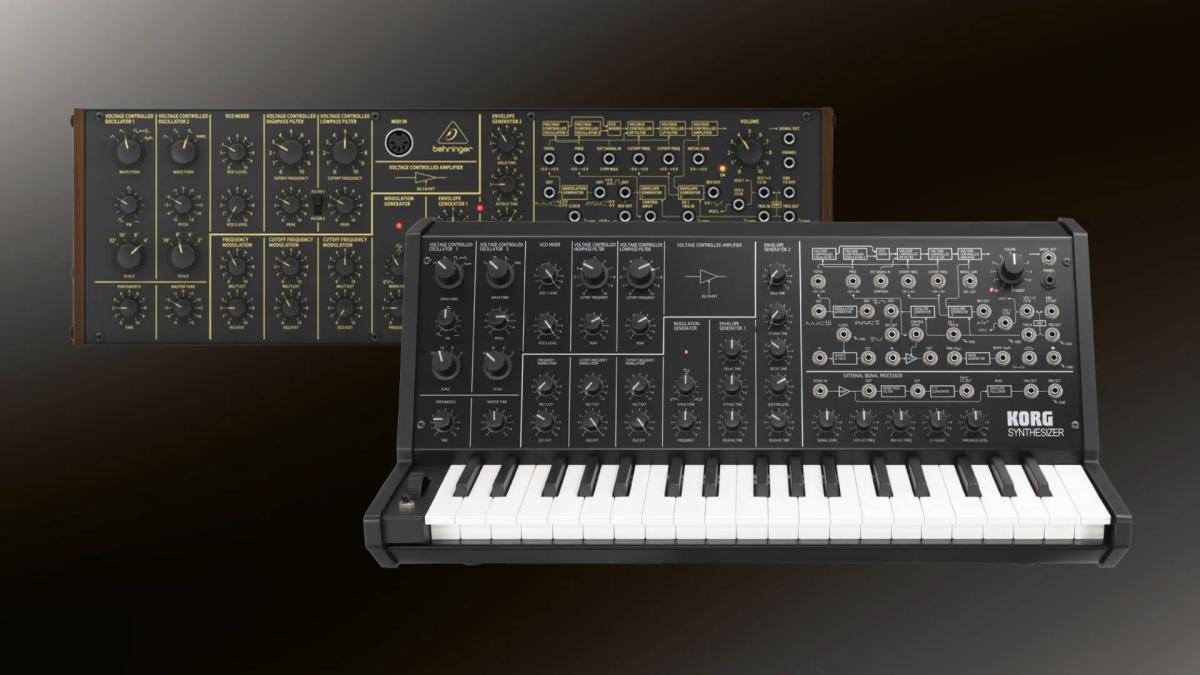
Choosing between the K-2 and the MS-20? This K-2 vs MS-20 comparison summarizes what Redaktion Megasynth found when testing both instruments, so you can see how they differ in sound, controls and value before you buy.

Rob Papen, the sound designer and plugin developer, has a personal stake in this comparison. The original Korg MS-20 was his very first synthesizer, bought when he was 15, so he knows it inside out. Megasynth invited him to put the Behringer K-2 up against the Korg MS-20 mini and the original MS-20, and he does so with one test sound after another.

Source video: Behringer K-2 review and comparison vs. Korg MS-20 by Rob Papen (Redaktion Megasynth, YouTube)

Table of Contents

  • Basic tone and the filter
  • Bass, two oscillators and the high-pass filter
  • A final pad-like sound
  • Which one makes more sense?

Basic tone and the filter

Starting with a single oscillator and the filter fully open, he hears a small difference. The K-2 is a bit more bass-oriented, perhaps a bit more nasal, while the Korg mini sounds brighter, and he attributes the basic tone difference to how each synth generates its oscillators; a sawtooth can sound slightly different from synth to synth.

The clearest difference appears in the filter. With a single oscillator and the resonance high, the original MS-20 sounds dirty and nasty. On the K-2, even with the peak fully open, it is not as aggressive, because it has a built-in limiter for the resonance. The original, by contrast, can go “very wrong”, which is part of its character. The Korg mini behaves much like the original. At the original’s sweet spot the K-2 sounds more grainy.

However the K-2 vs MS-20 debate plays out for you, the best test is still playing both instruments side by side.

Bass, two oscillators and the high-pass filter

Making a bass sound, he notes that the knob positions are not equal across the three: the decay is about 6 on the K-2, 4 on the original and between 4 and 5 on the mini. It is not a big problem, but it shows the settings are not interchangeable. With two oscillators and resonance opened until it almost self-oscillates, there are small volume differences he cannot explain. With a square wave and the high-pass resonance, the original again sounds very dirty, and the difference between the machines is smaller.

In the K-2 vs MS-20 comparison, price and playability matter as much as raw sound.

A final pad-like sound

For a pad-like synth sound, two sawtooth oscillators, the low-pass closed and the envelope amount fully open with a slow attack, all three get very close. What he notices is that the MS-20’s basic waveform is a bit more bassy, and the resonance and filter are more controllable on the K-2, which keeps things nice in some way, something he attributes to the components used in 1978–79 when the original was built.

K-2 vs MS-20: which one makes more sense?

In his opinion, the Korg MS-20 mini is closer to the original in sound than the K-2. But that does not make the K-2 a bad synthesizer; it simply sounds a bit different. If you want the dirtiest, most unruly resonance of the original, the mini or the original is the closer match.

If you prefer a more controllable resonance, the K-2 has an advantage. His closing point is the practical one: in the end it is the fun you have, and he is sure both will give you as much fun as the original gave him.

That is the K-2 vs MS-20 decision in short: match the instrument to the sound and workflow you actually want, and weigh the price difference before you commit.

Related comparisons

Sources

Bernardo de Azevedo
Written by
Bernardo de AzevedoFounder & Editor

His connection with music began at age 6, in the 1980s, when his father introduced him to Jean-Michel Jarre's Rendez-Vous on vinyl. He works professionally in the legal field, while synthesizers became his space for abstraction and creative exploration. Founder of The Synth Source.