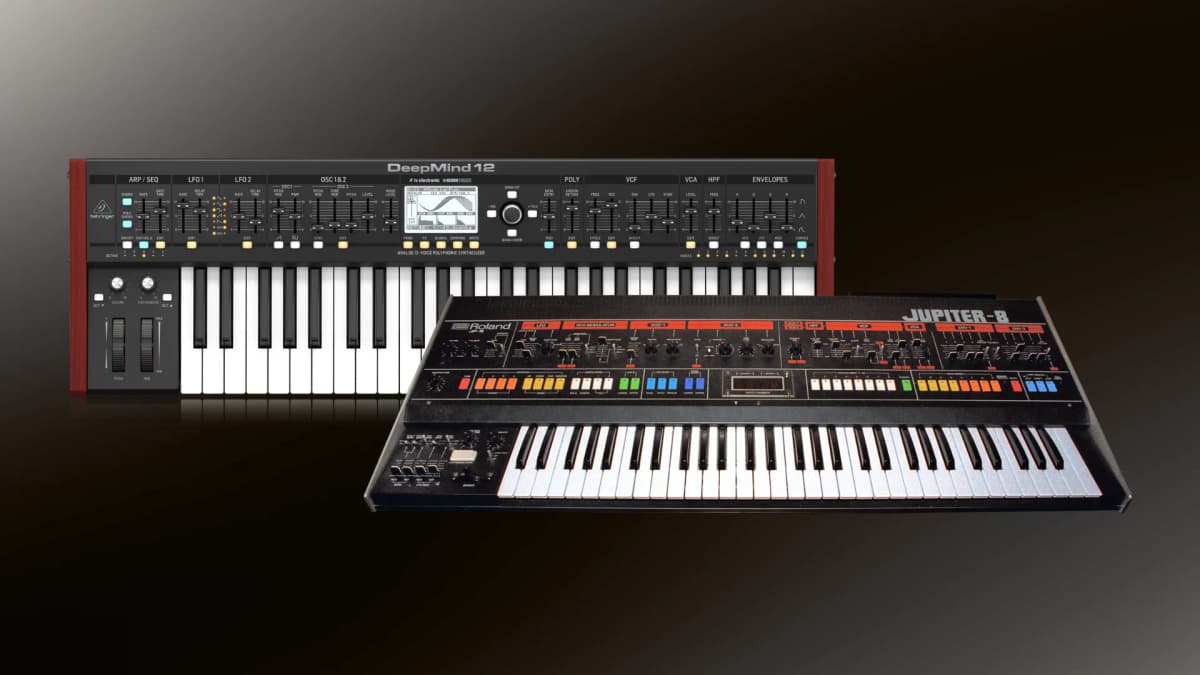
The effects section is also a major difference. Where the original has none in his demo, the DeepMind has reverb, delay and many other effects, and he mentions a very large selection. He also praises the iPad editor as a much more comfortable way to program the instrument.
In the DeepMind 12 vs Jupiter-8 comparison, price and playability matter as much as raw sound.
A string patch and the Dimension D chorus
His second example is a Jupiter-style string patch. Here, the DeepMind’s effects section matters: it includes an emulation of the Roland Dimension D chorus, a famous Roland effect, which he says is a really good emulation. Combined with reverb and delay, it makes the DeepMind more than a copy, since it supplies the finishing touches that vintage players often add externally.
He closes by noting that he has only scratched the surface of what the DeepMind 12 can do.
The DeepMind 12 vs Jupiter-8 question rarely has a single right answer, because it depends on how you actually work.
DeepMind 12 vs Jupiter-8: which one makes more sense?
The Jupiter-8 remains the original, and no recreation will replace the thing itself for those who want it. But as a practical comparison, this video makes an argument many players will find persuasive: a lot of the classic Jupiter-8 sound is simple, and the DeepMind 12 can reproduce it convincingly while adding voices, effects and an editor that the vintage machine never had.
That is the DeepMind 12 vs Jupiter-8 decision in short: match the instrument to the sound and workflow you actually want, and weigh the price difference before you commit.
Related comparisons
Sources
Cover image: composite of product photos. Roland Jupiter-8 photo by Ed Uthman (Wikimedia Commons), licensed CC BY-SA 2.0; cropped and combined with other images.