Home›Reviews›V-Stage vs Fantom: Same ZEN-Core sounds, two very diffe…
Reviews

V-Stage vs Fantom: Same ZEN-Core sounds, two very different jobs

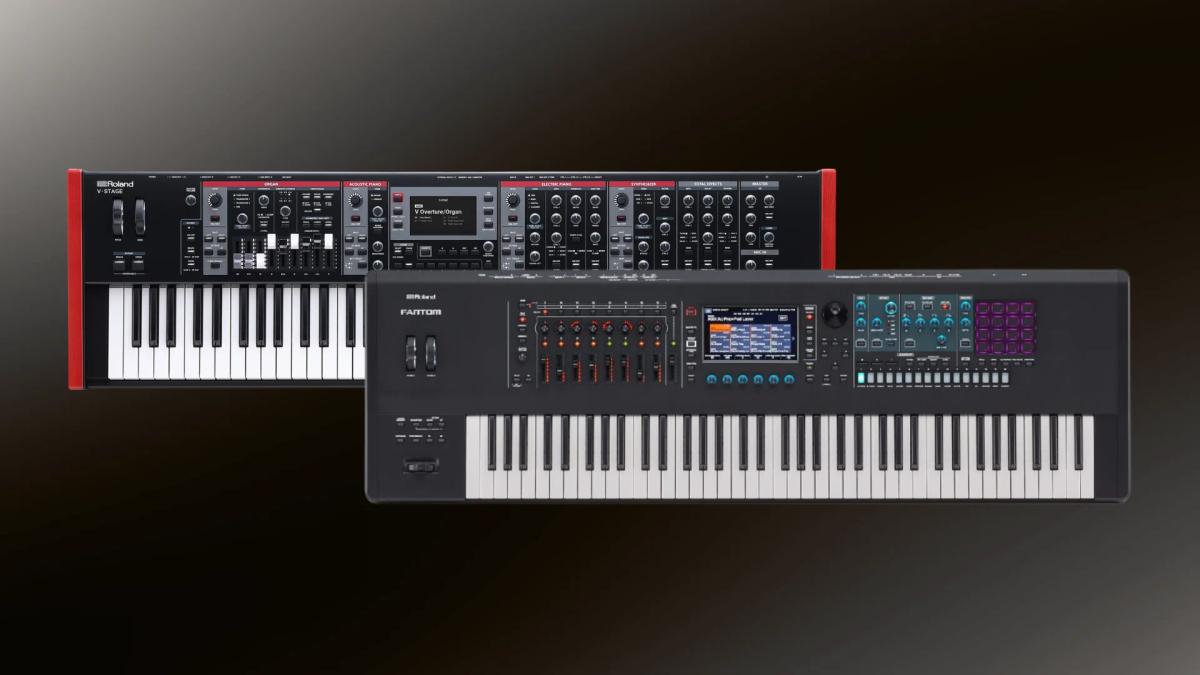
V-Stage vs Fantom: how do they really differ? We break down sound, controls and value from John Mike’s hands-on video test to help you choose.

Bernardo de Azevedo
Bernardo de Azevedo
· Updated
Roland V-Stage vs Roland Fantom comparison

Choosing between the V-Stage and the Fantom? This V-Stage vs Fantom comparison summarizes what John Mike found when testing both instruments, so you can see how they differ in sound, controls and value before you buy.

In this conversation, John Mike and keyboardist Ed Diaz take on a question they say is always tough: why buy a Roland V-Stage when a Fantom exists? As they put it, what is right for one player might be totally wrong for another, so Ed’s standard answer is to ask what job the keyboard has to do.

This is a talk rather than a controlled test, so the article is organised around their arguments.

Source video: DIFERENÇAS CHOCANTES! Roland V-Stage vs. Roland Fantom… Qual você deve comprar?! Com @EdDiazKeys (John Mike, YouTube)

Table of Contents

  • Price and shared engine
  • What the Fantom adds
  • What the V-Stage does better
  • Studio against stage
  • Which one makes more sense?

Price and shared engine

They check prices on the spot: the V-Stage 88 is around 3,999 dollars and a Fantom 8 EX appears at about 4,199 dollars at Sweetwater. Both use the same ZEN-Core engine and offer the V-Piano and the organ, as well as the electric pianos and the rest of the shared sound library.

However the V-Stage vs Fantom debate plays out for you, the best test is still playing both instruments side by side.

What the Fantom adds

The Fantom has a sequencer and “a buttload” of other features, including sampling. It offers 16 zones of sound against five on the V-Stage, and it works as a master keyboard, controlling rigs and acting as the hub of Ed’s studio. He keeps a Fantom 6 on his desk, where it makes sense as a production board.

In the V-Stage vs Fantom comparison, price and playability matter as much as raw sound.

What the V-Stage does better

One thing the V-Stage can do and the Fantom cannot yet is switch scenes without cutting off the V-Piano. The V-Stage also has the waterfall-style keys for the organ, which the Fantom lacks, and it has USB-C, since the Fantom’s design dates back a few years. Ed’s gig rig puts the V-Stage in the slot previously held by his VK-8 organ, because he loves organ and the V-Stage’s organ keys are suited to it.

Studio against stage

They argue that live players rarely use the Fantom’s heavier functions. Some may need the sampler to import custom sounds, and some, like a keyboardist friend, delve into the sequencer live, but the truth is most live players buy for sounds, feel and whether the keyboard has what they need. Ed likes how the Fantom 8 feels, its touchscreen and how quickly he can navigate it, but sees the V-Stage as the new shiny knife in the drawer. They live in two different places.

V-Stage vs Fantom: which one makes more sense?

There is no single winner. If you want a production hub with sampling, a sequencer, 16 zones and master-keyboard control, the Fantom is the stronger tool. If you mainly want the sounds on stage, with organ-friendly keys and seamless scene changes with the V-Piano, the V-Stage is the more focused choice, often at a similar price.

That is the V-Stage vs Fantom decision in short: match the instrument to the sound and workflow you actually want, and weigh the price difference before you commit.

If you can, audition the V-Stage and the Fantom in the same room, through the same speakers or headphones, and with the same patch ideas. Start with a basic sound on each, then move on to the kind of part you actually play: a bass line, a pad, a lead or a layered keyboard sound.

Pay attention to how quickly you can get to a sound you like, how the controls feel under your hands and whether you keep reaching for the same instrument. That kind of hands-on time will tell you more about the V-Stage vs Fantom question than any list of specifications.

Related comparisons

Sources

Bernardo de Azevedo
Written by
Bernardo de AzevedoFounder & Editor

His connection with music began at age 6, in the 1980s, when his father introduced him to Jean-Michel Jarre's Rendez-Vous on vinyl. He works professionally in the legal field, while synthesizers became his space for abstraction and creative exploration. Founder of The Synth Source.