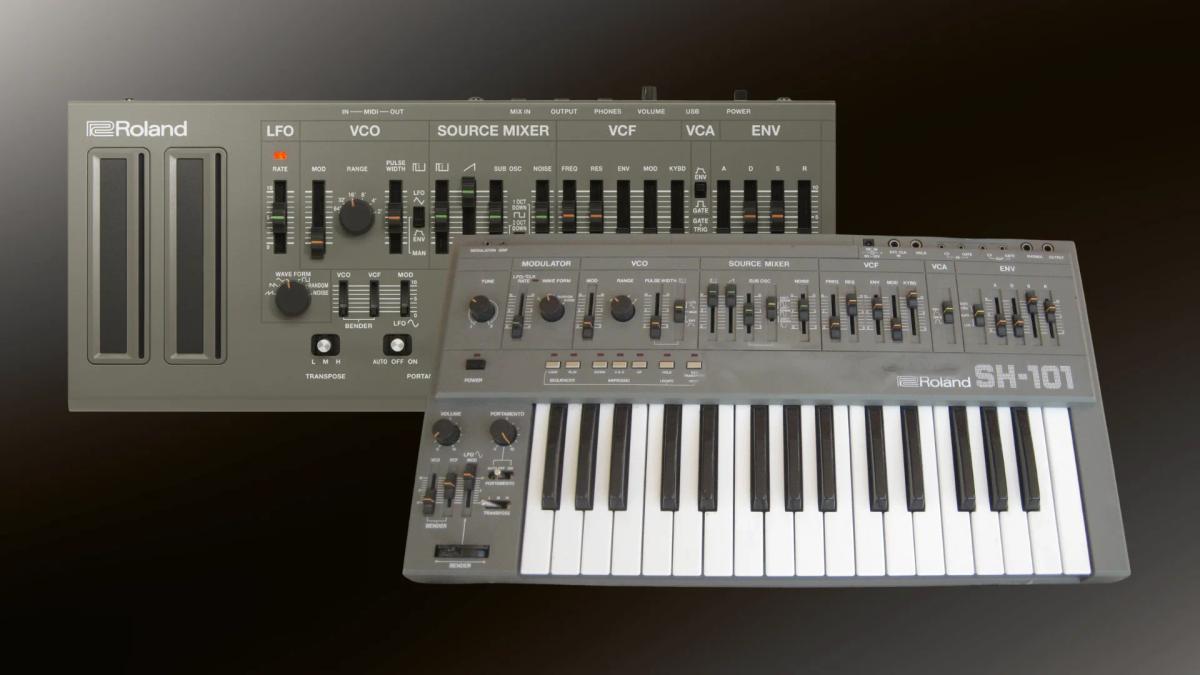
It can act as a four-voice poly with a unison mode, poly mode and chord mode, and is velocity-sensitive. Patches and sequences can be saved, unlike the SH-101, where a new sequence overwrites the previous one. Both sequencers hold 100 notes. He likes that Roland did not add effects.
In the SH-01A vs SH-101 comparison, price and playability matter as much as raw sound.
Sound and sequencer
He plays a series of sounds and says they can really sound the same: the SH-01A nails the 101. The old unit has a lot of humming noise at high volume, while the Boutique is nearly silent. The old unit has a bit more low end and grit, which he attributes to age.
The SH-01A vs SH-101 question rarely has a single right answer, because it depends on how you actually work.
Price and the verdict
The SH-01A costs 399 dollars, while used SH-101s go for around a thousand. He bought his 101 in the mid-80s for 500 dollars with a dead CEM 3340 oscillator chip he had to replace, and still disliked that it had no audio input.
SH-01A vs SH-101: which one makes more sense?
For the price, the SH-01A is the obvious choice: it sounds almost the same, stores patches, has MIDI, more range and four-voice polyphony. The SH-101 is the original, with a slightly gritty, noisier character and the longer sliders. He closes with trivia: VCO “feet” come from organ pipe lengths, where each halving of the pipe length is an octave.
That is the SH-01A vs SH-101 decision in short: match the instrument to the sound and workflow you actually want, and weigh the price difference before you commit.
Related comparisons
Sources
- SH01a vs SH101 (PlantBasedSynths, YouTube). This article is an original editorial analysis based on that video’s transcript.
Cover image: composite of product photos. Roland SH-101 photo by eternal jamzzzz (Wikimedia Commons), licensed CC BY 2.0; cropped and combined with other images.