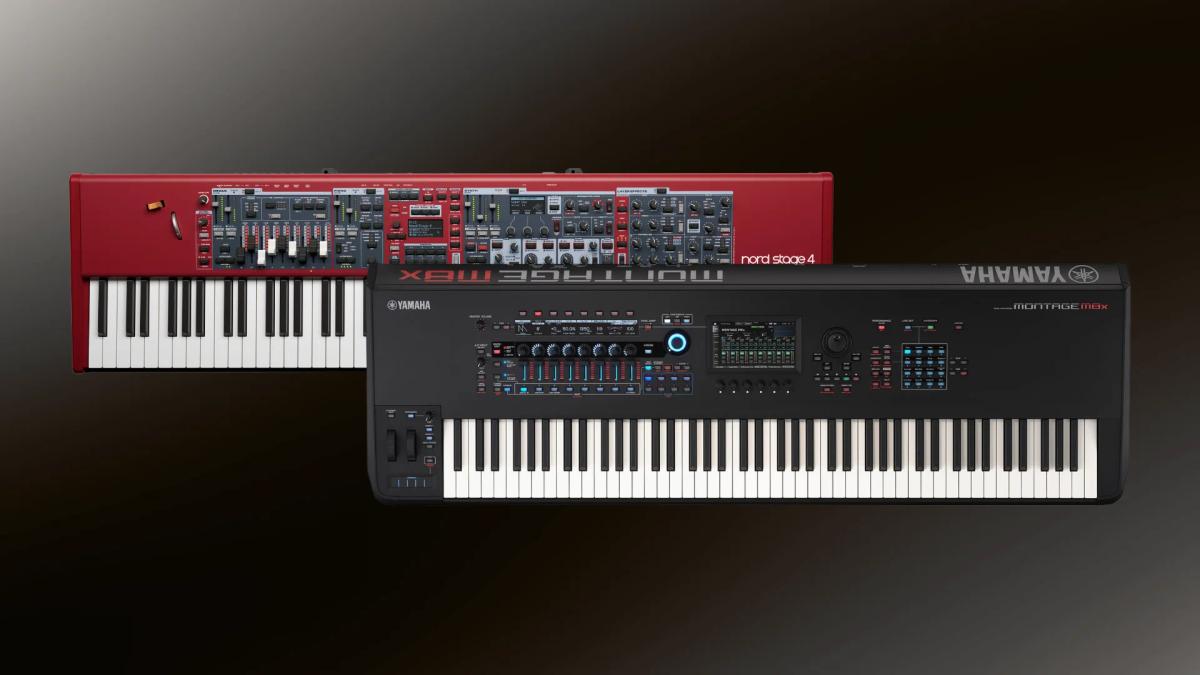
Against it, he plays the Montage’s new CFX2 piano, which he likes a lot; it has more natural structure but may need EQ to cut through. He prefers the Yamaha key action, which has polyphonic aftertouch, and gives the two pianos the same score.
In the Nord Stage 4 vs Montage M8x comparison, price and playability matter as much as raw sound.
Workflow and the “on the fly” argument
He learned the whole Nord Stage 4 in an hour and gives a thumbs up for workflow, with two small non-touch screens and a little menu diving. But he rejects the argument that it is easier to change things live: Yamaha, Roland and Korg workstations have large touchscreens and set lists where you can save everything per song, so a musician who knows the songs does not need to adjust on the fly.
The Nord Stage 4 vs Montage M8x question rarely has a single right answer, because it depends on how you actually work.
Nord Stage 4 vs Montage M8x: which one makes more sense?
His 10 out of 10 goes to the Montage M8x, which he calls the most powerful workstation ever made, followed by the Fantom for workflow and the Nautilus. The Nord Stage 4 is a good stage piano, he says, and the best choice for a worship musician who needs a great organ section, but it is not an all-in-one and cannot compete with a Modx or Montage for synth sounds.
His strongest criticism is price: he thinks it should be worth no more than $3,000 to $3,500. If weight is not an issue and you want an all-purpose instrument, he recommends the M8x; if you want the best stage-piano feel and a streamlined organ and piano setup, the Nord is a good keyboard, but not at its asking price in his view.
That is the Nord Stage 4 vs Montage M8x decision in short: match the instrument to the sound and workflow you actually want, and weigh the price difference before you commit.
Related comparisons
Sources