Home›Articles›Louis and Bebe Barron: The burned-out circuits behind F…
Articles

Louis and Bebe Barron: The burned-out circuits behind Forbidden Planet

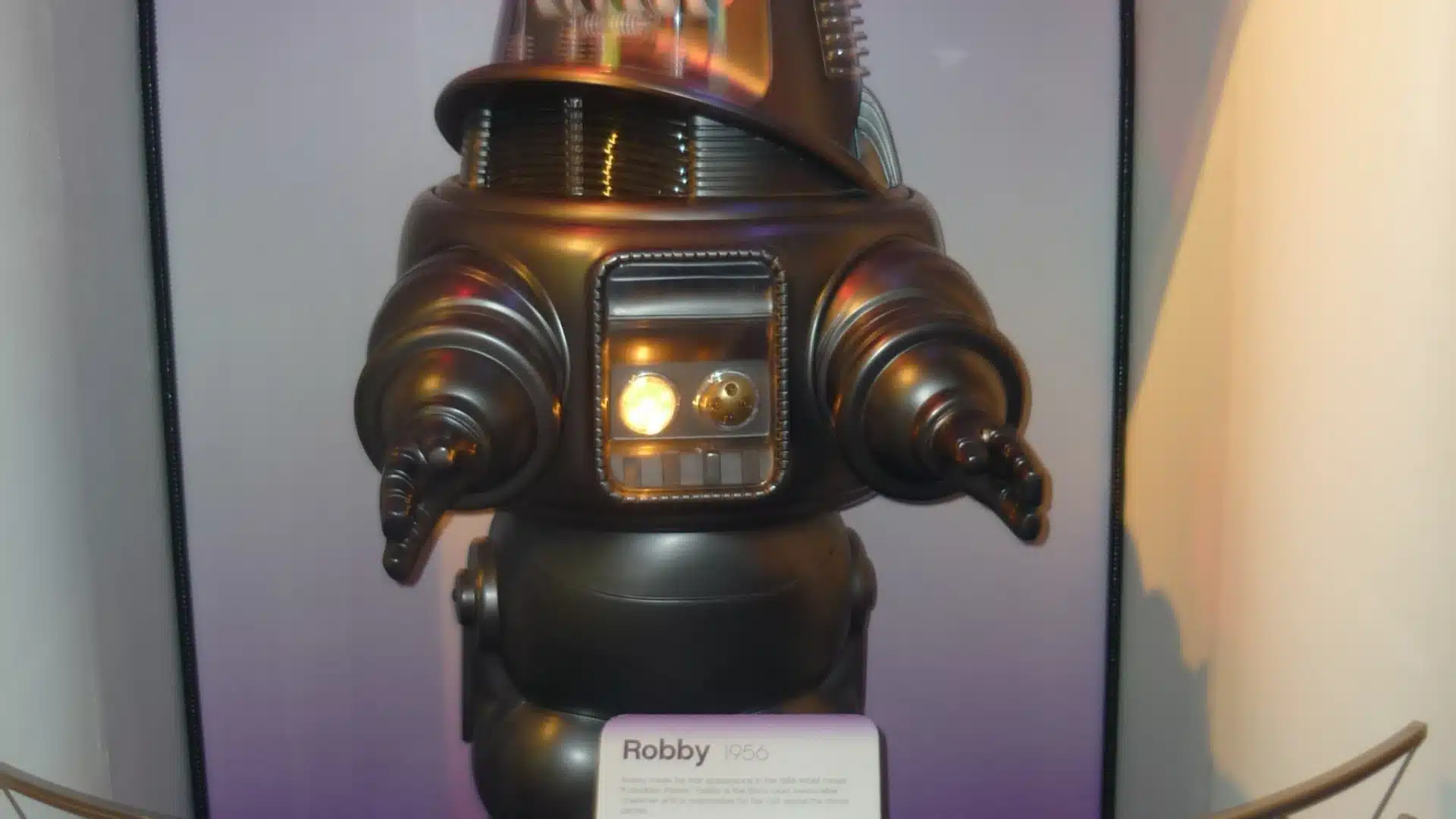
Forbidden Planet: The sounds in Forbidden Planet were never meant to be repeated. Louis Barron built electronic circuits, pushed them until they failed, and…

Bernardo de Azevedo
Bernardo de Azevedo
· Updated
Louis and Bebe Barron - historic photo

The sounds in Forbidden Planet were never meant to be repeated. Louis Barron built electronic circuits, pushed them until they failed, and the couple recorded whatever came out before the circuit died. Bebe Barron then sorted hours of that tape into a score that MGM released in 1956, years before a commercial synthesizer existed.

The result is often called the first entirely electronic film score. It is also a story about credit, because the film itself would not call it music, and about the strange ways industry rules can erase an artistic achievement. The question is how a married couple in a Greenwich Village studio made a score that Hollywood could not quite classify.

Table of Contents

  • Louis and Bebe Barron: a wedding gift and a Greenwich Village studio
  • Williams Mix and the first lessons
  • Circuits as actors
  • How Forbidden Planet came to a New York studio
  • Why the credit says tonalities
  • After MGM
  • Final perspective

Louis and Bebe Barron: a wedding gift and a Greenwich Village studio

Louis Barron was born in Minneapolis in 1920 and Bebe, born Charlotte May Wind, in 1925. According to Wikipedia they married in 1947 and moved to New York City, where they lived in Greenwich Village. Louis’s cousin, who worked at 3M, gave them a tape recorder as a wedding present, and the same cousin later helped them obtain early magnetic tape. That one gift set the direction of their lives. Effectrode’s profile of Louis identifies the machine as a Brush Soundmirror and dates the gift to 1948.

Soon after arriving, they opened a recording studio at 9 West 8th Street that served the avant-garde. Wikipedia says it may have been the first electronic music studio in the United States, and the wording is cautious. They recorded Henry Miller, Tennessee Williams and Aldous Huxley reading their work, and in June 1949 they released recordings of Anais Nin reading House of Incest and four other stories.

Louis built much of the studio’s equipment himself, including oscillators, a filter and a spring reverberator. Their film work in the early 1950s included three short films by Ian Hugo based on Nin’s writings, among them Bells of Atlantis in 1952 and Jazz of Lights in 1954, and one of two alternative soundtracks for Shirley Clarke’s Bridges-Go-Round in 1958, with Teo Macero providing the other.

Williams Mix and the first lessons

The studio’s early reputation came from a famous client. In 1952 and 1953, according to Wikipedia, John Cage used it for Williams Mix. The Barrons were hired as engineers, recorded more than 600 sounds, and spliced them into a piece about four and a half minutes long that took over a year to finish.

Cage went on to use the studio for Music for Magnetic Tape, working with Morton Feldman, Earle Brown and David Tudor. Wikipedia adds that Cage was the person who convinced the Barrons that what they were doing was music.

That detail matters because RedShark News says the couple themselves said their compositions were not music. The Wikipedia account suggests they began as technicians who were gradually persuaded otherwise, so the question of whether the work counted as music was already present in their studio years before Hollywood weighed in.

Circuits as actors

Louis Barron’s circuits were built from vacuum tubes and, according to Effectrode, included neon relaxation oscillators, ring modulators and clipping stages. Wikipedia reports that he based them on equations in Norbert Wiener’s 1948 book Cybernetics, and that most tones came from a ring modulator. He did not treat the circuits as notes on a keyboard. Instead the Barrons regarded each one as an actor with a characteristic pattern of behavior.

This approach had an unusual side effect. Wikipedia says sounds were produced by overloading the circuits until they burned out, so the same sound could never be reproduced exactly. RedShark News and Synthtopia describe the same practice. The consequence was that everything had to be recorded, and the tape became the real instrument. Bebe then shaped it with reverb, tape delay, reversal and speed changes, using several tape machines and physically cutting and splicing the material. She described the raw material as sounding like dirty noise, according to Wikipedia.

How Forbidden Planet came to a New York studio

MGM’s science-fiction film Forbidden Planet opened in 1956, premiering in Charlotte, North Carolina in early March and reaching more than 100 cities on 23 March, according to Wikipedia. According to Wikipedia, the Barrons were first slated to provide roughly twenty minutes of sound effects and electronic pieces. The composer Harry Partch was also expected to contribute, but when he did not continue, the Barrons took over the entire soundtrack.

The film’s page says Dore Schary, an MGM executive, hired them after consulting colleagues. The Barrons’ own page adds that the score eventually ran to about an hour and ten minutes. According to the film’s page, MGM had also hired the composer David Rose in 1955, but Schary discharged him in December of that year and his main title theme was discarded.


Their demand was just as unusual. They declined to move their equipment from New York to California for what was planned as a three-month job, and MGM agreed. Wikipedia describes it as the studio’s first production with a score produced outside the studio lot. The Barrons’ album notes, as quoted by Wikipedia, say they built individual cybernetic circuits for particular themes rather than relying on standard sound generators.

Why the credit says tonalities

The credit on screen does not say music. Wikipedia’s article on the Barrons states that the intended credit was Electronic Music by Louis and Bebe Barron, and that a contract lawyer from the American Federation of Musicians changed it at the last minute to Electronic Tonalities to avoid upsetting the union. The film’s own page describes the dispute without naming the federation. RedShark News also reports that the musicians’ union forced the term tonalities.

There was a lasting cost. The Barrons were not members of the Musicians’ Union, and Wikipedia says the union denied them membership in the 1950s, mainly out of concern about losing performer jobs. Because of their non-membership, the film was not considered for an Academy Award in the soundtrack category. RedShark News notes that the film’s special effects were nominated for an Oscar, but not the score. Wikipedia adds that the Barrons never scored another Hollywood film.

After MGM

The couple’s later life was far from silent. MGM declined to publish a soundtrack album at the film’s release, according to Wikipedia. The Barrons issued the soundtrack as an LP for the twentieth anniversary in 1976 on their own label, and a CD followed in 1986. They moved to Los Angeles in 1962 and divorced in 1970, though they kept working together until Louis died on 1 November 1989.

Bebe Barron later became a founding member and first secretary of the Society for Electro-Acoustic Music in the United States, serving from 1985 to 1987, and received its lifetime achievement award in 1997. She died in Los Angeles on 20 April 2008. Her last known work, Mixed Emotions, was composed in 2000 at the University of California, Santa Barbara.

Final perspective

Forbidden Planet has a strong claim to a place at the start of electronic film music. Wikipedia’s film article says it predates the Moog and Buchla synthesizers of the early 1960s, and notes that the theremin had appeared earlier in Spellbound and The Day the Earth Stood Still. Those films used one instrument. The Barrons built a whole sound world from machines that they made themselves and that did not survive the making.

The deeper lesson is about the value of documentation. A modern synthesist can save a patch and recall it. The Barrons had no such option, so every happy accident had to be caught on tape the moment it happened. The performance was the recording, and the recording was the instrument. Their score also shows how fragile recognition can be: union membership rules kept their score out of Oscar consideration, even as the film’s special effects were nominated.

That is why the Forbidden Planet story keeps drawing musicians and historians back to it.

Few chapters of synthesizer history show as clearly as Forbidden Planet how far a single idea can travel.

Looking back, the Forbidden Planet episode suggests that the most unusual stories are often the most instructive ones.

For anyone tracing the history of electronic instruments, Forbidden Planet is a name worth remembering.

What makes the Forbidden Planet story memorable is how ordinary the people involved were, and how improbable the outcome turned out to be. Anyone retelling the Forbidden Planet story has to admit that part of it comes down to timing and luck. The Forbidden Planet story also shows how quickly a promising idea can slip out of public view.

Revisiting the Forbidden Planet story today, it is striking how many details were lost or rewritten over the years. Each retelling of the Forbidden Planet story adds a little more context to what the original documents leave out. If there is one lesson in the Forbidden Planet story, it is that technology rarely follows a straight line.

Related stories

Sources

Bernardo de Azevedo
Written by
Bernardo de AzevedoFounder & Editor

His connection with music began at age 6, in the 1980s, when his father introduced him to Jean-Michel Jarre's Rendez-Vous on vinyl. He works professionally in the legal field, while synthesizers became his space for abstraction and creative exploration. Founder of The Synth Source.