Home›Articles›What is a famous song that uses a synthesizer? 20 class…
Articles

What is a famous song that uses a synthesizer? 20 classics and the synths behind them

Famous synth songs include I Feel Love, Autobahn, Take On Me and Blinding Lights. Here are 20 classics from 1969 to 2019 and the synths documented on each.

Bernardo de Azevedo
Bernardo de Azevedo
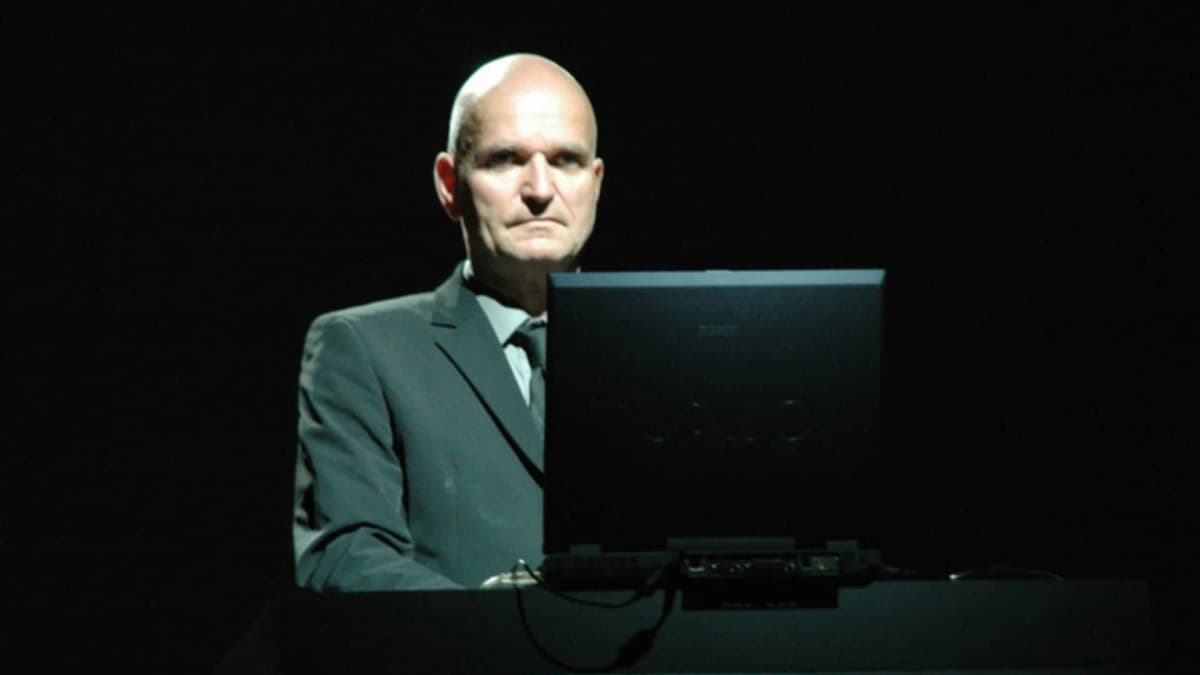
Kraftwerk performing live on stage, a band behind classic synthesizer songs

A famous song that uses a synthesizer in a landmark way is Donna Summer’s “I Feel Love” (1977), whose pulsing sequenced Moog part topped the UK chart and changed dance music. Other classics include Kraftwerk’s “Autobahn”, Jean-Michel Jarre’s “Oxygène”, a-ha’s “Take On Me” (with its Yamaha DX7 bass preset), Phil Collins’s “In the Air Tonight” (Prophet-5) and, more recently, The Weeknd’s “Blinding Lights”. Below are 20 famous synth songs from 1969 to 2019, with the instruments that credible sources actually document.

We only list a synth when a reliable source names it. Plenty of famous tracks have instrument claims that circulate online without a solid source, and we note some of those at the end rather than repeating them as fact.

A famous song that uses a synthesizer: 20 classics

Song Artist Year Notable synth or electronic instrument
Here Comes the Sun The Beatles 1969 Moog synthesizer, overdubbed by George Harrison
Popcorn Gershon Kingsley 1969 Moog synthesizer (Music to Moog By)
Baba O’Riley The Who 1971 Lowrey organ generating the repeating pattern
Autobahn Kraftwerk 1974 Minimoog, EMS Synthi AKS, custom vocoder
Oxygène (Part IV) Jean-Michel Jarre 1976 EMS VCS3 and Synthi AKS among others
I Feel Love Donna Summer 1977 Moog synthesizer borrowed from Eberhard Schoener
Flash Light Parliament 1978 Minimoog bass
Are ‘Friends’ Electric? Tubeway Army 1979 Polymoog and Minimoog
In the Air Tonight Phil Collins 1981 Sequential Prophet-5
Don’t You Want Me The Human League 1981 All-synth arrangement and drum machine
Rio Duran Duran 1982 Roland Jupiter-4 arpeggiator
Sexual Healing Marvin Gaye 1982 Roland TR-808 and Jupiter-8
Thriller Michael Jackson 1982 Roland Jupiter-8 opening blasts; Prophet-5 across the album
Relax Frankie Goes to Hollywood 1983 Roland Jupiter-8 (Andy Richards)
Take On Me a-ha 1985 Yamaha DX7 “Bass 1” preset
Take My Breath Away Berlin 1986 Yamaha DX7 “Bass 2” preset on the main riff
Acid Tracks Phuture 1987 Roland TB-303
Orinoco Flow Enya 1988 Roland D-50 “Pizzagogo” preset
Vogue Madonna 1990 Korg M1 piano and organ presets
Blinding Lights The Weeknd 2019 1980s-style synth-pop production (models not documented)

The 1960s and early 1970s: synths sneak into rock

“Here Comes the Sun” shows how the Moog first entered pop: as a colour, not the foundation. Harrison added his part in a late overdub on 19 August 1969, just before the final mix, and the Beatles used the same Moog elsewhere on Abbey Road. Our Beatles and the Moog story has the details.

“Popcorn” started as a track on Gershon Kingsley’s 1969 album Music to Moog By and became a worldwide hit through Hot Butter’s 1972 cover. It is probably the most recognisable early synth melody.

“Baba O’Riley” is a useful correction. Its famous pulsing intro is often called a synth, but the documented source is a Lowrey organ producing keyboard patterns in real time. On “Won’t Get Fooled Again”, from the same 1971 album, the organ was also processed through a VCS3 synthesizer. Both are early landmarks of electronic sound in rock, even if only one involves a synth.

The 1970s: sequencers, Moogs and the birth of electronic pop (including I Feel Love)

“Autobahn” made Kraftwerk international stars. By then the group had a Minimoog and an EMS Synthi AKS, and they used a custom-built vocoder on the album. Autobahn reached number 5 on the US album chart and the edited single reached number 11 in the UK. Read how Kraftwerk turned the Minimoog into a signature.

“Oxygène” was recorded in a makeshift home studio on analog synths including the EMS VCS3 and Synthi AKS, and the album has sold an estimated 18 million copies. See our Oxygène story and our VCS3 story.

“I Feel Love” is the track most often credited with inventing electronic dance music. Giorgio Moroder and Pete Bellotte built it on a Moog borrowed from composer Eberhard Schoener, with Schoener’s assistant Robby Wedel showing them how to sync it to a click track. It hit number one in the UK in July 1977 and number six in the US. David Bowie later recalled Brian Eno calling it the sound of the future. The full account is in our I Feel Love story.

“Flash Light” is the classic example of the Minimoog as a bass instrument in funk, and “Are ‘Friends’ Electric?” took Gary Numan’s Polymoog and Minimoog wall of sound to number one in the UK in 1979, a few months before his solo single “Cars” did the same. For the instrument’s background, see our Minimoog story.

The 1980s: polysynths, FM and the synth-pop peak after I Feel Love

“In the Air Tonight” uses the Prophet-5, the polysynth that also appears throughout Thriller and on Madonna’s Like a Virgin. Our Prophet-5 story explains why it was everywhere.

“Don’t You Want Me” topped the UK chart over Christmas 1981 and the US Billboard Hot 100 in July 1982. Its synth score was arranged by Jo Callis and Philip Adrian Wright, and it is cited as the first UK number one to use a drum machine exclusively. Sources do not agree on every synth used, so we leave the models out.

Roland’s polysynths dominate the early 1980s. “Rio” is often said to feature a Jupiter-8, but the arpeggio is actually a Jupiter-4 in random mode. The Jupiter-8 is documented on Marvin Gaye’s “Sexual Healing” (with the TR-808, which made it the first US hit to feature the 808), on the big synth blasts that open “Thriller” and on Frankie Goes to Hollywood’s “Relax”. Our Roland Jupiter-08 page looks at Roland’s modern take on that sound.

From 1983 the Yamaha DX7 took over. Its factory “Bass 1” preset is on “Take On Me”, which reached number one in the US in 1985, and “Bass 2” drives the main riff of Berlin’s “Take My Breath Away”. The DX7 was the first synth to sell more than 100,000 units. For a modern FM keyboard in the same family, see our Yamaha Reface DX page.

Late in the decade, Phuture’s “Acid Tracks” turned a cheap Roland TB-303 into the squelching sound of acid house, and Enya’s “Orinoco Flow” made the D-50’s “Pizzagogo” pluck famous. Read our Roland D-50 story.

1990 to now: workstations and the 1980s revival

Madonna’s “Vogue” is the textbook Korg M1 record, its piano and organ presets also defining early-1990s house; see our Korg M1 story. Three decades later, The Weeknd’s “Blinding Lights” brought 1980s-style synth-pop back to the top of the charts and in 2021 was named the biggest song in Billboard Hot 100 history. Its producers have not published a definitive synth list, so we describe the sound rather than guess the gear.

Famous songs we left out of the table

Several songs that appear on almost every “best synth songs” list, including Van Halen’s “Jump”, Vangelis’s “Chariots of Fire”, Eurythmics’ “Sweet Dreams (Are Made of This)”, New Order’s “Blue Monday” and Harold Faltermeyer’s “Axel F”, are unquestionably synth classics. We could not confirm the exact instruments from sources available to us while writing this piece, so we have not named them here. If you want the Vangelis side of the story, our CS-80 and Blade Runner article covers his best-documented instrument.

FAQ

Is I Feel Love the most famous synthesizer song?

There is no official answer, but “I Feel Love” is the most frequently cited for its influence, and “Take On Me” and “Blinding Lights” are among the biggest synth-driven chart hits.

What was the first hit song with a synthesizer?

Among albums, Wendy Carlos’s Switched-On Bach (1968) was the first synthesizer record to become a major hit. Among singles, “Popcorn” in its 1972 Hot Butter version was an early worldwide synth hit.

Is “Baba O’Riley” played on a synthesizer?

The documented source of its looping intro is a Lowrey organ, not a synthesizer. The VCS3 synth is associated with “Won’t Get Fooled Again” from the same album.

What synth was used on “Take On Me”?

The Yamaha DX7’s “Bass 1” factory preset is documented on the track.

Related articles

Sources

Image credits: Kraftwerk photo by Daniele Dalledonne, Wikimedia Commons, CC BY-SA 2.0. The photo was cropped to fit the featured image.


Bernardo de Azevedo
Written by
Bernardo de AzevedoFounder & Editor

His connection with music began at age 6, in the 1980s, when his father introduced him to Jean-Michel Jarre's Rendez-Vous on vinyl. He works professionally in the legal field, while synthesizers became his space for abstraction and creative exploration. Founder of The Synth Source.