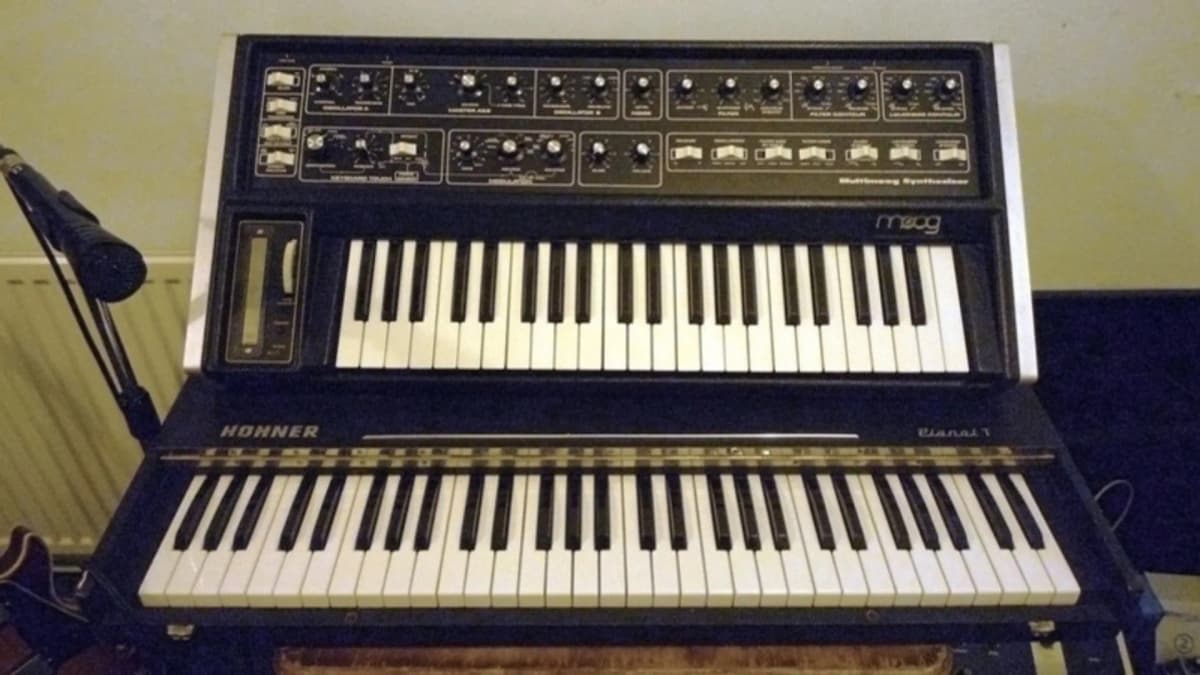
Synths work differently. Many classic and current analog synths are monophonic (one note at a time), so you play basslines and leads rather than chords. Polysynths often have 4 to 16 voices, which is plenty for pads and chords because synth playing rarely involves pedalled piano textures. For example, the Korg minilogue has four voices and the Prophet-5 has five.
Piano vs synth sound design: the real dividing line
On a piano, the sound is fixed; your touch and pedalling shape it. On a digital piano or arranger you mostly choose from presets. On a synthesizer, the sound itself is something you build. Turning the filter cutoff, slowing an envelope’s attack or adding vibrato with an LFO changes the instrument in real time, and many synth parts are as much about those movements as about the notes. That is why a synthesist may play a single held chord and still be “performing”.
Workstations and many modern synths combine both worlds: realistic pianos and orchestral sounds alongside deep synthesis. Instruments like the Roland Jupiter-X or Juno-X include piano sounds, but their keys and controls are built around synth playing.
Piano vs synth: what each is for
- Learning classical or jazz piano: acoustic piano, or a digital piano with graded hammer action.
- Playing keys in a band: stage piano, or a synth with good piano and organ sounds.
- Playing complete songs alone at home or at events: arranger keyboard.
- Electronic music, film textures, basslines and leads: synthesizer.
- Writing and producing full arrangements on hardware: workstation (or a computer with a MIDI controller).
Piano vs synth: which is easier to start on?
It depends on your goal. If you want to play piano music, start on a piano or a weighted digital piano; learning on light synth keys and switching later means rebuilding finger control. Piano also gives the strongest foundation in harmony and two-handed independence, but it asks for regular, structured practice before it sounds satisfying.
If you want to make electronic music, a synth is usually the easier starting point. A single held note can already sound like music, presets give instant results, and arpeggiators and step sequencers let you create parts without advanced keyboard technique. The difficulty moves elsewhere: understanding oscillators, filters and envelopes. We look at that learning curve in Is synth hard to learn?
FAQ
Piano vs synth: are a piano and a synthesizer the same?
No. A piano produces sound with hammers and strings (or imitates that with samples), while a synthesizer generates and shapes sound electronically and is designed for creating new sounds. They share a keyboard layout, so basic note and chord knowledge transfers between them.
Piano vs synth: is synth easier than piano?
For making electronic music, usually yes: presets, held notes, arpeggiators and sequencers produce satisfying results quickly. For playing piano repertoire, no, because synths lack weighted keys. Synths add their own learning curve in sound design. See Is synth hard to learn? for details.
Can a synthesizer sound like a piano?
Many digital synths and all workstations include sampled piano sounds, and some sound very convincing. But most synths have unweighted keys and limited polyphony, so playing piano music on them feels different from a real piano.
Piano vs synth: can I learn piano on a synthesizer?
You can learn notes, chords and basic theory on any keyboard. For proper piano technique, though, weighted 88-key action matters, so a digital piano is the better practice instrument.
What is the difference between a keyboard and a synthesizer?
“Keyboard” is an umbrella term. An arranger or portable keyboard offers preset sounds and backing; a synthesizer focuses on editing and creating sounds.
Related articles
Sources
Image credits: Multimoog and Hohner Pianet photo by Formication, Wikimedia Commons, CC BY 2.0. The photo was cropped to fit the featured image.