Homeโ€บArticlesโ€บBest synths for live performance in 2026: 10 stage-readโ€ฆ
Articles

Best synths for live performance in 2026: 10 stage-ready picks by role

Ten synths and grooveboxes that hold up on stage in 2026, grouped by role, plus what makes a synth live-friendly and practical tips for a reliable live rig.

Bernardo de Azevedo
Bernardo de Azevedo
ยท Updated
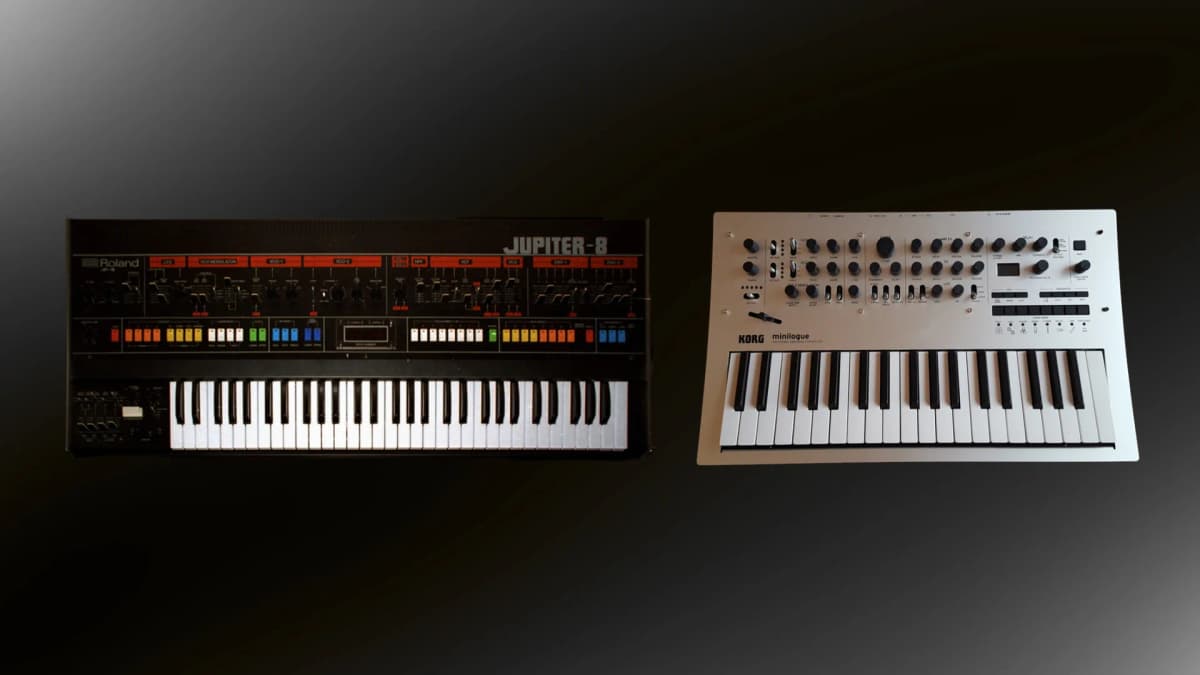
Live performance synths: Roland Jupiter-8 and Korg minilogue

The best synths for live performance in 2026 are the ones that recall sounds instantly, offer splits and layers or pattern chaining, and survive being packed into a car every weekend. For a main keyboard, the Nord Wave 2, Yamaha MODX M6 and Roland Juno-X are the safest bets. The Moog Messenger and Novation Bass Station II cover mono bass and leads, and the Elektron Digitone II and Novation Circuit Tracks lead the groovebox field.

This guide groups ten instruments by the job they do in a live rig, explains which features actually matter on stage, and ends with practical advice on clock, backups and transport. Prices are approximate US street prices as of October 2026 and vary between retailers.

Quick picks: the best synths for live performance

Synth Role Key live feature Approx. US price (Oct 2026)
Nord Wave 2 Main keyboard poly 4 layers, 3 split points, 48 voices ~$2,999
Yamaha MODX M6 Main keyboard poly Live Set pages, 8-part performances ~$1,950
Roland Juno-X Main keyboard poly 256 scenes, XLR outs, mic input ~$2,260
ASM Hydrasynth Keyboard Expressive poly Poly aftertouch, 4-octave ribbon ~$1,399
Moog Messenger Mono bass/lead Full-size keys, 256 presets ~$699
Novation Bass Station II Mono bass/lead Simple panel, light and sturdy ~$600
Elektron Digitone II Groovebox/synth 16 tracks, song mode, p-locks ~$1,100
Novation Circuit Tracks Groovebox Battery, 2 MIDI tracks, pattern chains ~$480
Teenage Engineering OP-XY Compact all-in-one 16-hour battery, 24 voices ~$2,299
Korg microKORG 2 Compact/travel poly Vocoder, AA battery power ~$600

What makes a synth live-friendly

Instant, glitch-free recall

On stage you need to change sounds between songs, and sometimes in the middle of one, without silence or a cut-off tail. Look for setlist or live modes that put your sounds in playing order, and for seamless switching that lets a held note or reverb tail ring out while the next patch loads.

Splits and layers

A single keyboard that can put bass in the left hand and pads in the right replaces a second instrument. Count how many parts you can split or layer, whether each part has its own effects, and whether you can adjust their levels from the panel without diving into menus.

Performance controls

Wheels, aftertouch, a ribbon, assignable knobs and pedal inputs let you shape a sound while you play. Synths that let one control move many parameters at once (Yamaha’s Super Knob, Nord’s morphs) are especially useful when your hands are busy.

Sequencer and pattern chaining

For electronic sets, the sequencer is the instrument. You want pattern chaining or a song mode, the ability to queue the next pattern so it starts on the bar line, and mutes you can trigger without stopping playback.

Outputs, power and build

Balanced or XLR outputs make life easier at venues with long cable runs. Separate outputs help front-of-house mix your drums apart from your synths. Check whether the power supply is internal (no lost wall-wart) and how the instrument feels with a gig bag over your shoulder. Weight matters more on the fifth flight of stairs than in a showroom.

Main keyboard polysynths

Nord Wave 2 for live performance

Nord builds keyboards for touring players, and the Wave 2 is its most synth-focused model. It has 48 voices, four layers that can each use analog-style, wavetable, FM or sample oscillators, and up to three split points with optional crossfades.

Layer faders sit on the panel, so you can bring a pad up under a lead without touching a menu, and morphs let velocity, aftertouch, the wheel or a pedal move many parameters at once. The 61 semi-weighted keys and a weight of about 8.75 kg (19 lb) make it a realistic single-keyboard rig.

Its two line outputs are unbalanced, which is worth knowing. At around $2,999 it is the most expensive keyboard here, and the price reflects the build and the speed of the workflow.

Yamaha MODX M6 for live performance

The MODX M6 combines Yamaha’s sample-based AWM2 engine, an FM-X engine and the AN-X virtual analog engine in a 61-key body that weighs about 6.6 kg (14.6 lb). Performances hold up to eight parts, so pianos, strings and synth layers can sit together in one sound.

The Live Set pages give you 256 preset and 2,048 user slots to lay out a setlist in order. It also has foot controller jacks, a sustain input and multichannel USB audio. Seamless switching and the Super Knob have been strengths of the MODX line, but check the details for very large performances.

At about $1,950, it is the best value among full-size workstation-style synths for covers, worship and session players who need realistic acoustic sounds next to synths.

Roland Juno-X for live performance

The Juno-X pairs Juno-60 and Juno-106 style models with Roland’s ZEN-Core sound library, four play parts and a rhythm part. Its 256 scenes store complete setups including arpeggio and effects settings, which works well as a setlist. Live players will also appreciate the XLR main outputs, a mic input with vocoder, and a USB audio interface. The trade-off is weight: about 11.6 kg (25.6 lb) is heavy for a 61-key synth. It sells for around $2,260. If you are weighing it against Roland’s flagship, our Jupiter-X vs Juno-X comparison covers the differences.

ASM Hydrasynth Keyboard for live performance

The Hydrasynth Keyboard is the choice for players who treat expression as part of the performance. Its 49-key bed has polyphonic aftertouch, so each finger can bend its own note, and a four-octave ribbon sits above the keys. It has eight voices of wave-morphing synthesis and a big, varied preset library. It does not do multi-part splits the way the Nord or Yamaha do, so it works best as a second keyboard for leads and expressive pads. It costs about $1,399. The Hydrasynth Deluxe adds more voices and multitimbral parts if you need them.

Mono synths for bass and leads

Moog Messenger for live performance

The Messenger gives you a Moog low end in a compact case with 32 full-size, semi-weighted keys with velocity and aftertouch. There are 256 preset slots, so every song’s bass or lead patch is a button press away. A 64-step sequencer and arpeggiator handle repeating parts, and MIDI runs over both DIN and USB-C. At about $699 it is the easiest way to put a Moog on a small stage, and it fits on top of a main keyboard.

Novation Bass Station II for live performance

The Bass Station II has been a stage favorite for over a decade. It is light, simple and tough. Every function has its own control, so fixing a sound mid-set is quick, and patch memory plus an arpeggiator and sequencer cover the essentials. It sells for about $600 at major US retailers, with European prices notably lower. The Swifty edition is the same synth with a different look.

Grooveboxes and all-in-ones

Elektron Digitone II for live performance

The Digitone II is a 16-track, 16-voice synth and sequencer with four synth machines: two FM types, a wavetable engine and a detuned swarm engine. Every track can also drive external gear over MIDI. The sequencer offers per-step parameter locks, conditional trigs, probability, a Euclidean generator, chord mode and a song mode for arranging a full set.

Elektron’s pattern-change behavior (queuing the next pattern so it starts at the end of the current one) is the reason so many live electronic acts build their sets around these boxes. It costs about $1,100, depending on retailer. For a version with keys, see the Digitone Keys.

If your set is more about samples and drums, the Digitakt II at a similar price uses the same sequencer.

Novation Circuit Tracks for live performance

Circuit Tracks is the most approachable groovebox for live use. Two six-voice polyphonic synth tracks, four drum tracks and two MIDI tracks run from a grid of pads, with patterns that chain up to 256 steps. A built-in battery gives roughly four hours of use, and it can also run from USB power. It costs about $480. It lacks the depth of the Elektron boxes, but it is quick to learn and hard to get lost in during a show, which matters when the lights go down.

Compact and travel rigs

Teenage Engineering OP-XY for live performance

The OP-XY is a 24-voice synth, sampler and sequencer that weighs about 900 g and runs for around 16 hours on its battery. It has several synth engines, a multisampler, a speaker, USB-C, Bluetooth MIDI, and a multi-out port that can send MIDI, CV or sync to other gear.

That combination makes it a full set in a backpack, and a strong choice for musicians who fly. It costs about $2,299 at US retailers, and we found it lower at some European stores. Its small screen and dense workflow need practice before you trust it on stage.

Korg microKORG 2 for live performance

The microKORG 2 carries on the original’s job as a gig-bag synth. It has 37 mini keys, eight voices (four per sound when layering two), a vocoder with included mic, and power from six AA batteries or a supplied adapter. It sells for about $600 in the US, often noticeably less in Europe. It is a sensible backup keyboard or a lightweight main synth for small venues and duo gigs. The original microKORG is still a cheap used option.

Live-rig tips

Decide who owns the clock

Pick a single master clock, usually your groovebox or the laptop, and set everything else to follow it over MIDI. Turn off clock output on every other device so you never have two masters fighting. If you use a laptop, a dedicated MIDI interface is more reliable than daisy-chaining clock through several synths, and a MIDI thru box helps when you have more than two followers.

Back up before every tour

Export patches, setlists and projects to a computer and to cloud storage after every rehearsal where you change something. Elektron, Novation, Yamaha, Nord and Roland all offer editor or librarian software or file transfer for this. Keep a USB stick with your backups in the gig bag, so a factory reset on a rented or repaired unit does not end the show.

Build in redundancy

Know what you will do if one instrument dies mid-set. A compact synth with your key sounds stored on it, such as a microKORG 2 or S-1-sized box, is cheap insurance. Carry spare power supplies, a spare USB cable, and at least one spare audio and MIDI cable for each device. If your rig relies on a laptop, practice playing a reduced version of the set without it.

Protect the gear

A padded gig bag is fine for car travel. Flights and regular touring call for a hard case or flight case. Decksaver-style lids keep dust and drinks off knobs between soundcheck and showtime, and they protect controls inside a soft case. Label every power supply with the instrument it belongs to, because many look the same but have different voltages and polarity.

Simplify the signal path

A small mixer on your side of the stage lets you send a single stereo pair to front of house, which makes changeovers faster and gives you control over your own balance. Use DI boxes for unbalanced outputs on long runs, and bring a ground-lift option in case of hum.

Related articles

Sources

Image credits: Roland Jupiter-8 photo by Ed Uthman (edited by Clusternote), Wikimedia Commons, CC BY-SA 2.0; Korg minilogue photo by Aeternus, Wikimedia Commons, CC BY-SA 4.0. Photos were cropped, cut out and placed on a gradient background for the featured image.


Bernardo de Azevedo
Written by
Bernardo de AzevedoFounder & Editor

His connection with music began at age 6, in the 1980s, when his father introduced him to Jean-Michel Jarre's Rendez-Vous on vinyl. He works professionally in the legal field, while synthesizers became his space for abstraction and creative exploration. Founder of The Synth Source.