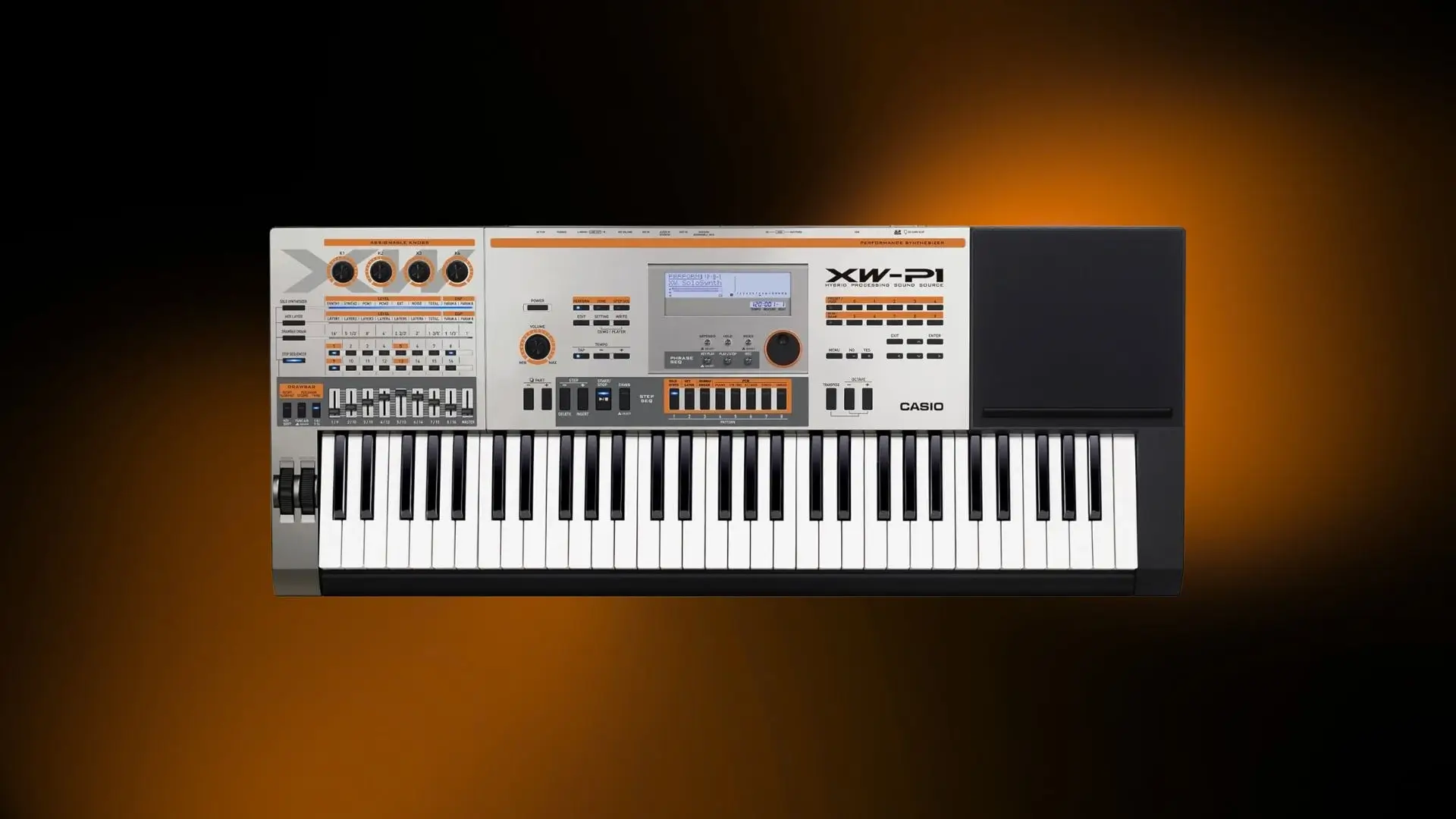
The Casio XW-P1 also sat beside the XW-G1, which leaned more toward groove production and sampling-oriented use. The Casio XW-P1 was the more stage-oriented sibling: broader in performance sounds, stronger in Hex Layer and organ functionality, and aimed at players who wanted a compact all-rounder with unusual synthesis depth hidden inside.
The Casio XW-P1 matters because it complicates the simplified story of Casio as only a maker of inexpensive home keyboards after the 1980s. It showed that Casio still understood how to build an instrument with a distinct technical idea, even if the execution carried the compromises of its price point and market position. The XW-P1 was not a mass-culture icon like the CZ-101, and it did not reshape the Casio XW-P1 market. Its significance is quieter: it was a serious, eccentric, and somewhat underappreciated attempt to give gigging musicians a flexible digital synth at an accessible price.
Its design also anticipated a broader expectation that affordable instruments should be hybrid by default. It combined performance controls, PCM material, synthesis blocks, sequencing, effects, MIDI, USB, and battery operation before that kind of multi-role design became even more common in compact keyboards and groove-oriented synths. The Casio XW-P1 did not always make those elements easy, but it put them in one instrument with a confidence that feels very Casio: practical, feature-dense, slightly unconventional, and more powerful than its image suggests.
In retrospect, the Casio XW-P1 is not important because it was flawless. It is important because it was a rare moment when Casio stepped back into professional synthesis with a machine that did not simply imitate the analog revival. It proposed a different route: digital layering, performance control, portability, and hybrid architecture.
The most clearly documented public associations with the XW-P1 are demonstrator and launch-context appearances rather than famous album credits. Mike Martin of Casio America presented the Casio XW-P1 in early Sweetwater demonstrations, helping explain its Solo Synth structure, CZ-waveform connection, sequencing tools, and performance orientation. Daniel Fisher also demonstrated the Casio XW-P1 in a Sweetwater context, including a performance-style tribute associated with “Shine On,” which helped show how the Casio XW-P1 could be used for expressive lead and layered textures rather than only preset playback.
A useful curiosity is that Casio’s XW-P1 and XW-G1 made their world debut at the 2012 NAMM Show, where Casio described the unveiling as its first new synthesizer launch in 24 years. Casio also reported that the XW models received a “Gotta Stock It” award and that Casio received a “Companies to Watch” award at that show. That matters because it frames the XW-P1 not as a routine catalog keyboard, but as a symbolic return.
Another curiosity is the limited-edition color history. MusicRadar reviewed a gold limited edition and noted that only 200 of those units existed, while Music Connection covered a Chrome Orange XW-P1CO variant tied to Casio’s Legends Collection. Those versions make the Casio XW-P1 visually memorable in a way that fits the Casio XW-P1’s broader identity: a performance synth trying to stand apart from both plain workstations and retro analog reissues.
- Current market position: Out-of-production digital performance synth with a niche following rather than a mainstream collectible status.
- New price signal: Archived retailer information shows a Sweetwater reference price of $669, while a UK review of a limited gold edition listed £699. These should be treated as historical retail references, not current new-market prices.
- Used market signal: Reverb price-guide data places typical used values roughly in the low-to-mid hundreds of dollars, depending on condition, region, accessories, and seller expectations.
- Availability: It is not usually hard to find in the way rare vintage synths are, but it is not constantly abundant either. Availability varies by country, and clean units may require patience.
- Buyer notes: Confirm that the power adaptor is included or correctly replaced, check the sliders and buttons, test the LCD, verify audio outputs, test the keybed, and inspect the SD card slot and battery compartment.
- Support ecosystem: Official manuals and support documents remain available, and community discussions still exist, but it does not have the extensive third-party preset and editor ecosystem of more widely adopted synths.
- Ease of finding: Easier than many vintage Casio synths, harder than current mass-market keyboards.
- Market trajectory: Overlooked rather than strongly collectible. Its long-term position may improve among players interested in unusual digital hybrids, but it has not become a major vintage-market trophy.
The Casio XW-P1 represents Casio’s most interesting kind of ambition: not luxury, not nostalgia for its own sake, but a practical and slightly strange attempt to give players a lot of musical machinery in one portable instrument. Its presets and interface do not always flatter it, and it cannot replace a dedicated analog polysynth, clonewheel organ, or premium workstation. But its Solo Synth engine, Hex Layer mode, drawbar controls, sequencing tools, and historical timing make it more than a forgotten budget keyboard. It matters because it was Casio’s hybrid comeback statement: imperfect, capable, underrated, and unmistakably its own thing.